
Best Bet Prediction for Today — A UK Reader's Guide to Tips, Value and the Margin
 Available in US
A “best bet prediction for today” is, in plain terms, someone else’s opinion on which selection is most likely to win. The opinion may be free, it may be paid for, and it may come wrapped in statistics that look authoritative. None of that turns opinion into certainty. This guide is built around that single point: how a prediction is constructed, what a price actually contains, what a bookmaker’s “free bet” really costs the punter who claims it, and which UK-licensed operators are worth comparing. No tip is.
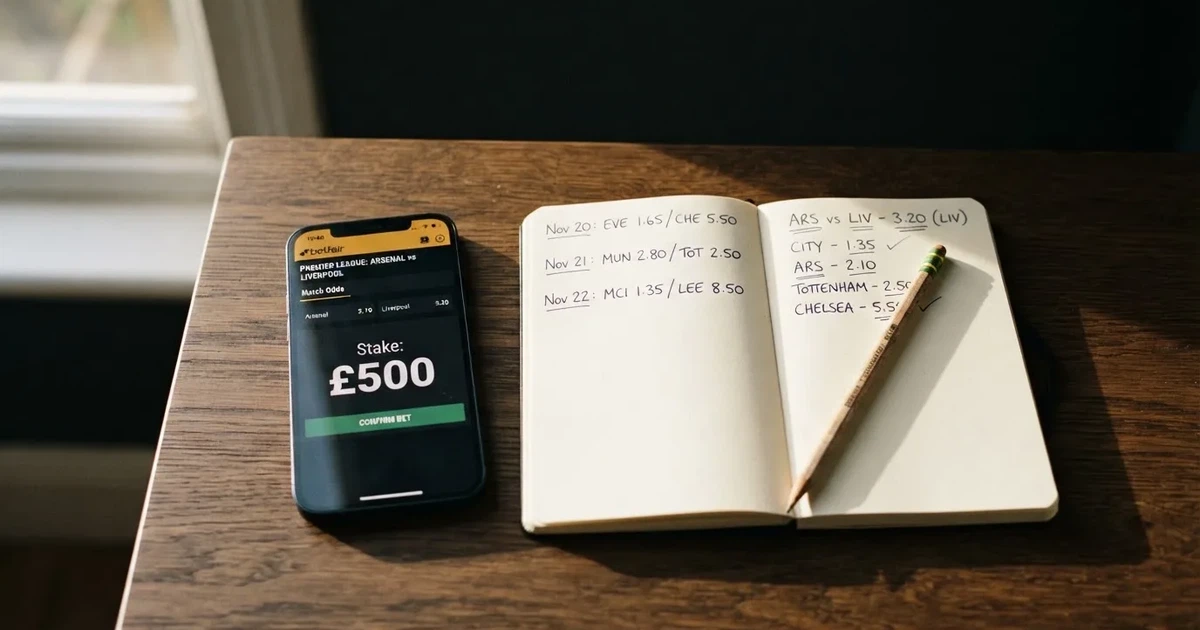
Current as of October 30, 2026 against the Gambling Commission’s public register and each operator’s own terms.
How a “Best Bet Prediction for Today” Is Built
A prediction, before it is a tip, is an estimate. Someone — a tipster, a model, a betting site’s own trader — looks at the available information and decides that one outcome is more likely than the price on offer suggests. The work is plain: read the form, weigh the line-up, account for injuries and suspensions, look at the head-to-head record, look at home and away splits, then compare the resulting probability with the price the bookmaker is offering. Where the punter’s probability exceeds the implied probability in the price, the bet is said to have “value”. Where it does not, the bet is a donation to the bookmaker’s margin.

The building blocks are unglamorous. Recent results matter, but only the relevant ones: a team that wins the league after the title is mathematically wrapped up often stops performing, and form reads differently at that point than the table does. Statistics give a baseline — expected goals, shots on target, the share of possession that leads to actual chances — and a baseline is not a verdict. Line-ups change everything: a forward rested for a cup tie, a defender back from suspension, a goalkeeper suddenly fit again. Even weather and pitch can move the line on a low-scoring sport.
What a tipster adds is judgement, and judgement is not checkable. A model adds a weighting, and the weighting is the tipster’s choice. The marketing — “AI-powered”, “data-driven”, “winning team” — describes how the prediction is sold, not how it is built. A punter who reads a tip should ask three things: on what evidence is the selection chosen, what price was the tipster holding in mind, and what record has the tipster published, with stakes, on past selections at the same price. The third question is the one most tips fail, because most tipsters do not publish a verifiable record at all. The honest framing: a tip is an opinion with a price attached, and opinions are wrong more often than the marketing lets on.
Value Bets and What the Marketing Hides
A value bet is a selection whose price is higher than the true probability of it winning warrants. The arithmetic is straightforward. A bookmaker offers 3.00 (2/1) on a horse the punter judges, after study, to have a one-in-two chance of winning. The implied probability in the price is one divided by 3.00, which is roughly 33%; the punter’s estimate is 50%. The gap is value. Over many bets at prices the punter has judged correctly, value turns a profit; over many bets at prices the punter has judged incorrectly, value turns a larger loss than the bets deserved.

What the marketing calls a “sure bet” is the same idea without the honesty. There is no such thing as a sure outcome in a competitive event, and a tipster who promises one is selling certainty they cannot have. The honest term is “value bet”, and even that is conditional: it assumes the punter’s probability estimate is better than the market’s, and the bookmaker’s margin is stripped out correctly. Both assumptions fail often enough to make the page honest about it.
What this costs the punter in practice is the gap between marketing and arithmetic. A “free” prediction site sells the punter’s data and attention; a “100% bonus” costs more in turnover than it returns in expected value; a “best odds” claim on a market with a five-point margin is not the best odds by much. The scepticism is not cynicism. It is the position the arithmetic supports, applied where the arithmetic has something to bite on.
The Bookmaker’s Margin and Why It Is in Every Price
The margin — sometimes called the overround — is the slice of every pound staked that the bookmaker keeps on average across a market. It is built into the prices themselves. A football match priced at 2.10 / 3.40 / 3.60 looks like three honest probabilities; it is not. The implied probabilities add up to more than 100%, and the excess is the margin. A market with a five-point margin gives back, on average across all outcomes, 95p for every pound staked; a market with an eight-point margin gives back 92p. The punter pays the difference, bet by bet, market by market, because no individual bet captures the average.
The illustrative calculation below uses a clean two-way market at decimal odds of 1.90 against 1.90 — evens with the same small edge each side. The implied probability of each outcome is one divided by 1.90, roughly 52.63%, and the two add to 105.26%. That is the overround, the gap between the two outcomes’ implied chances and 100%. The payout share — what the bookmaker returns across all outcomes on this market — is the reciprocal of that overround: 1 divided by 1.0526, which works out to 95.00%. The margin — what the bookmaker keeps — is one minus that, which is 5.00% on a market priced symmetrically at 1.90 / 1.90. State it as a band, not a single figure: most Premier League 1X2 markets sit between 4% and 7% margin, with the tighter end common on the match outcome and the wider end common on less popular markets or props.
What this means for the punter is simple. The margin is the tax on every bet, paid whether the bet wins or loses, and it cannot be beaten by picking more winners. Beating the margin requires picking winners more often than the market’s implied probability — which is what a value bet is — and that requires the punter’s estimate to be sharper than the traders who set the line. Most punters are not. The honest margin number is therefore the single most useful thing to know about a market before placing a bet.
Why a Prediction Site Cannot Promise a Win
Prediction sites sell a service, and the service is someone else’s opinion. The product page says “winning tips”, “expert analysis” and “high success rate”; the small print, where it exists, says past performance is not a guide to future results and gambling is for entertainment. Both are true, and the gap between them is what the punter pays.
The arithmetic behind the gap is plain. A tipster who publishes a 60% strike rate on ten-bet accumulators at average odds of 5.00 (4/1) is running at an implied probability of 60% on each leg against a market that prices each leg at 20% — which means the tipster is claiming to add, on average, 40 percentage points of probability per leg. Over ten legs, that claim is roughly 60% to the tenth power compounded against the market, a number so far above what any sustained record in the public domain shows that the marketing should be read with that in mind. Strip out the marketing and the picture is the same: no published tipster in the UK holds a verifiable, audited record of sustained value betting at the prices they publish tips for. The few who come close run short samples, niche markets, or both.
The right response is not to distrust every tip. It is to read each tip with the conditions the marketing leaves out. What is the sample, what is the price, what is the record on past selections at the same price, what is the stake the tipster recommends, and what is the punter’s own bankroll? A tip that does not answer those questions is not a tip; it is an advertisement.
What a Betting Prediction App Does and Does Not Do
A prediction app is, in most cases, a sportsbook or a tipster subscription delivered through a phone. The “AI” branding is widespread; the “AI” usually refers to a model that scores fixtures against a set of inputs and ranks them. The ranking is the prediction; the punter decides whether to bet it. The app may show recent form, expected goals, head-to-head, line-ups, in some cases a tipster’s record. None of that turns the ranking into a win.
The reason a phone is convenient — the slip is two taps from the fixture — is also the reason it can be dangerous. An app remembers the card, prefills the stake, sends a push notification when the price moves, and offers a price boost on the same fixture the punter just looked at. That is good service and poor bankroll discipline, and the countermeasure is the punter’s own: a staking plan, a deposit limit, a session cut-off, a rule against chasing. The platform is not the protection; the punter is.
Apps also vary in what they actually do for the punter. The Vbet app, published by SCGO Limited, offers Bet Builder, pre-match and in-play betting, live streaming and a live calendar with results and stats. DragonBet’s app offers cash out both in-play and pre-match, and live streaming of racing. Paddy Power’s app offers Bet Builder+, Popular Bet Builders, Super Sub, expanded Win More markets and player and ACCA stats. Star Sports’ app pairs the sportsbook with virtual sports, casino and live casino. NetBet’s app offers Daily Boosts, Profit Boosts, free bet offers, a Bet Builder with instant dynamic odds and sports stats for major leagues. Midnite’s site shows in-play events, an acca builder, popular accas and price boosts with maximum-stake limits and cites Gambling Commission licence 101839. bet365’s app offers in-play betting, live streaming, Bet Track, Match Live and a Live Golf Tracker. Lottoland UK’s app combines casino, lottery betting, sports betting and scratchcards and states it is licensed by the Gambling Commission for customers in Great Britain.
The mechanical fact about a prediction app is that the prediction is whatever the app says it is — a tipster’s selection, a model’s ranking, a market consensus dressed as analysis. The value of the app is in execution, account management and the live markets, not in the prediction itself.
Staking, Bankroll and the Discipline That Beats a Tip
The most underrated part of betting is what happens after the tip. A punter with a sharp selection, a poor staking plan and a thin bankroll will lose in the long run. A punter with a so-so selection, a flat stake of one to two per cent of bankroll and the discipline to walk away will not. The reason is variance: any single bet is noisy, and over the long run the only thing the punter controls is how much of the bankroll is at risk on each one.
A flat stake is the cleanest starting point. One to two per cent of bankroll per bet, same stake whether the punter feels confident or not, and a stop-loss at the session or the day. The punter’s edge, if any, is small; the staking plan’s job is to keep the punter solvent while the edge plays out. A variable stake — the punter doubles up after a loss, or backs the “best” tip with five times the usual amount — adds volatility the edge does not justify, and the mathematics of ruin catch up faster than the marketing suggests.
What this means for prediction sites is straightforward. A tip that recommends a fixed unit stake is more useful than a tip that recommends a stake relative to the punter’s “confidence”, because the punter’s confidence is the variable the staking plan should dampen. A tipster who says “back this with one unit” and publishes a record at one unit is giving the punter something checkable. A tipster who says “back this with confidence” is giving the punter nothing.
UK Legality — The Gambling Commission and the Public Register
Betting in Great Britain is licensed under the Gambling Act 2005, and the regulator is the Gambling Commission, a non-departmental public body sponsored by the Department for Culture, Media and Sport. The Commission’s public register is searchable by business name, trading name, domain or account number, and the register is the whole test of whether a brand holds a licence. Since the Gambling (Licensing and Advertising) Act 2014 an operator whose remote facilities are used in Great Britain needs a Commission licence wherever it is based, so a Curaçao, Maltese or Gibraltar licence is not a substitute for serving GB customers. Northern Ireland sits outside the 2005 Act and has its own older law; a “GB-licensed” label does not regulate Northern Ireland.
The minimum age for gambling is 18, and since 7 May 2019 every licensed operator must verify the customer’s name, address and date of birth before the first deposit or bet — including a free bet or bonus. The verification is not optional, and no licensed brand offers anonymous play. Credit cards are banned for gambling in Great Britain since 14 April 2020, including credit-card-funded payments through an e-wallet; debit cards and bank-based payments are not covered by that ban. The current General Betting Duty on the operator’s gross profits is 15%, and a new remote betting rate of 25% applies within it from 1 April 2027; the remote rate stays at 15% until then. The player pays no tax on betting winnings in Great Britain.
The promotion rules that matter for a punter comparing “free bet prediction” offers are these. Since that date in January 2026, wagering requirements on bonuses are capped at 10x — a £10 bonus at 50x needs £500 of bets, and under the cap no more than £100 — and mixed-product promotions that require gambling on two or more product types are banned. Whether the cap applies to free bets with no wagering condition, and any cap on the money value of a bonus, are not established. Advertising runs through the CAP Code (non-broadcast) and BCAP Code (broadcast), enforced by the ASA, alongside the Commission’s LCCP marketing conditions; the CAP Code requires marketing to be socially responsible, not of strong appeal to under-18s, and no one who is or seems to be under 25 may be featured gambling. The Premier League clubs’ withdrawal of gambling sponsorship from the front of matchday shirts from 2026/27 is voluntary, not law.
Player Protection — Limits, GAMSTOP and the Checks That Apply
GAMSTOP is the national multi-operator online self-exclusion scheme and a mandatory licence condition for online operators since 31 March 2020. Exclusion periods are six months, one year, five years, or five years with auto-renewal, and after the minimum period the exclusion stays in place for a further seven years unless the customer asks GAMSTOP to remove it. GAMSTOP covers online sites and apps; betting shops use a separate service. Every GB-licensed operator listed in this guide is a GAMSTOP member.
A financial vulnerability check applies to licensed remote betting when a customer’s deposits minus withdrawals exceed £150 in a rolling 30 days (since 28 February 2025). The check is a public-record check — for example bankruptcy or county court judgments — not an income check and not a credit reference check. Financial risk assessments — the “affordability checks” of the press — have been announced in a staged plan (Commission article of 7 July 2026), with no start date; write “announced, staged, no start date”, never “in force”. Deposit limits are a separate requirement: operators must offer a gross deposit limit on a fixed time frame, with the first changes applying since 31 October 2025 and a second phase postponed to 30 September 2026. There is no state-set deposit or loss ceiling for betting: limits are the customer’s choice, and the punter who wants a ceiling sets one.
Help is real and free. GamCare runs the National Gambling Helpline; GambleAware funds treatment and education; the NHS runs gambling clinics; Gamblers Anonymous runs peer-support meetings. Unibet’s safer gambling tools include deposit limits, a Player Profile test, product restrictions and self-exclusion, with live chat support and links to BeGambleAware, GamCare, GAMSTOP, Gambling Therapy and the BGC. The tools are not the protection; using them is.
Offshore and Unlicensed Brands — What the Punter Forfeits
A GB licence is compulsory at the point of consumption, and providing gambling facilities in Great Britain without the licence the Act requires is an offence aimed at the operator. No offence aimed at a customer who merely bets on an unlicensed site was found in the public record, but the practical loss is real: no GAMSTOP coverage, no Commission complaints route, no approved dispute-resolution body, no British consumer redress if funds are withheld, and not bound by the 10x bonus cap or the £150 vulnerability check. The honest framing: licensed means checks, limits, GAMSTOP, the bonus cap, and verification before the first bet; unlicensed means none of those protections and possible loss of funds. Neither is “the safe choice” by default.
Enforcement is disruption, not blocking. The Commission uses cease-and-desist notices, search-engine referrals, work with registrars, hosts and payment providers, and has been given, or is about to receive, court-order DNS blocking powers. Never write that ISP blocking is in operation today. The brand on a tipster’s page or a YouTube video may not be on the Commission’s register, and the register is the whole test. The punter who cares about protection checks the register before depositing.
The Ten UK-Licensed Bookmakers Behind a “Best Bet Prediction Site”
The ten operators below all hold a Gambling Commission remote licence for general betting standard (real events) and are listed on the public register. They are not ranked by likelihood of winning — no such ranking exists — and they are not endorsed by the page. They are the licensed set against which a punter compares a tip site’s recommendation. The table that follows gives the licence number, the licence holder and what the operator’s own terms say about the page’s subject — what a “prediction” costs on that platform, what a free bet looks like, what the safer-gambling tools are.
A brand may be licensed and still be the wrong fit. Spreadex is regulated by the FCA for spread betting and by the Gambling Commission for fixed-odds betting, and notes that spread betting losses can exceed the deposit. Greenlight Bet’s site shows a “Launching Soon” placeholder with a contact form and email sign-up, and no offers, payment methods or licence text. BetTom’s sports welcome offer is 50% back as a free bet of up to £50, with a matching 50% back up to £50 as free slot funds for casino play; full terms apply. Betwright states it is licensed in the UK and provides responsible gaming tools, and its customers must be aged 18 or over. London Bet is published by Thistle Bet Limited, states it is licensed and regulated in the UK, and its app has a 17+ App Store age rating. Copybet UK Limited states it is licensed and regulated in Great Britain by the Gambling Commission under account number 53774. Betmaster is operated by BM Solutions GB Ltd, registered in Malta, and states it holds Gambling Commission account number 65699. The 10bet app states that 10bet.co.uk is licensed by the Great Britain Gambling Commission under licence 43173. The set has gaps; the gaps are where the data stops, not where the brand fails.
How the Operators Differ — A Landscape View
| Brand | Gambling Commission remote licence number and licence holder | What the operator’s own terms state on predictions, tips and offers |
|---|---|---|
| VBet | Licence 44662, holder SCGO Limited | App offers Bet Builder, pre-match and in-play betting, live streaming and a live calendar with results and stats |
| DragonBet | Licence 64908, holder DragonBet Ltd | App offers cash out in-play and pre-match, and live streaming of racing |
| Star Sports | Licence 9177, holder Star Racing Limited | Describes itself as the UK’s leading independent bookmaker, with virtual sports, casino and live casino alongside the sportsbook |
| Sky Bet | Licence 67370, holder SBG Sports Limited | Welcome offer is £30 in free bets, credited as three £10 free bet tokens after a deposit of at least £5 and a first single or each-way bet of at least 5p at odds of 1/1 or greater |
| NetBet | Licence 39170, holder Netbet Enterprises Limited | Offers Daily Boosts, Profit Boosts and free bet offers, a Bet Builder with instant dynamic odds, and sports stats for major leagues |
| Paddy Power | Licence 39439, holder PPB Counterparty Services Limited | App offers Bet Builder+, Popular Bet Builders, Super Sub (a bet rolls over to the replacement if a selected player is substituted), expanded Win More markets and player and ACCA stats |
| Fitzwilliam Sports | Licence 48760, holder SBKI Limited | Phone and live chat with the office open 09:00 to 21:00, Monday to Sunday, with messenger replies generally within 90 seconds |
| BetTom | Licence 64959, holder Bet Tom Limited | Sports welcome offer is 50% back as a free bet of up to £50, with a matching 50% back up to £50 as free slot funds for casino play; full terms apply |
| Spreadex | Licence 8835, holder Spreadex Limited | New customer offer is £60 in free bets for a £10 fixed-odds bet, with the free bets usable across fixed odds and spread betting; the qualifying bet must be placed within 28 days of opening the account; spread betting losses can exceed deposits |
| QuinnBet | Licence 61011, holder QuinnBet (Gibraltar) Limited | Free bets valid for 7 days from credit, usable on any market at odds of 1/2 (1.5) or greater with maximum odds of 50/1; straight accumulators are allowed but Trixies, Patents and Yankees are not |
The licence column is the test the public register applies. The third column is the operator’s own terms on the features the page covers — what kind of in-play product the platform runs, what the welcome package looks like in the operator’s own words, what staking products the punter can build. Reading the third column as “this is what a prediction costs on the platform” rather than “this is the prediction” is the right reading.
The Free Bet Prediction Sites Behind the Tips
A “free bet prediction site” is one of two things: a tipster subscription whose tip is dressed as a free bet on a particular outcome, or a sportsbook that gives a free bet to a customer who follows the tip. The marketing makes the two look the same. The arithmetic is different. A tipster with a tip on a 3.00 (2/1) selection recommends the selection; whether the punter bets with their own cash or a free bet changes the cost. A free bet at 3.00 whose stake is not returned on a win has a value of roughly one-third of the stake at that price — the formula is free-bet amount multiplied by (odds minus one) divided by odds, multiplied by the market’s payout share — and that value is what the offer is worth on average, not what it wins.
The “best free betting prediction site” framing turns the same arithmetic on the tipster. A tipster whose published record shows value at one unit per selection is the rarest of the lot; a tipster whose published record shows losses dressed as wins at variable stakes is the commonest. The punter who reads the record before paying the subscription reads a different page than the punter who reads the marketing.
What the welcome terms look like in plain prose: Sky Bet’s offer is £30 in free bets as three £10 tokens after a £5 deposit and a first bet of at least 5p at 1/1 or greater. Spreadex’s offer is £60 in free bets for a £10 fixed-odds bet, usable across fixed odds and spread betting, with the qualifying bet placed within 28 days of opening the account. BetTom’s offer is 50% back as a free bet of up to £50, with a matching 50% back up to £50 as free slot funds. QuinnBet’s free bets are valid for 7 days from credit and can be used on any market at odds of 1/2 (1.5) or greater, with maximum odds of 50/1; straight accumulators are allowed but Trixies, Patents and Yankees are not. Coral’s sports welcome offer is “Get £40 in Free Bets when you bet £20”: a deposit and sports bet of £20 or more at minimum odds of 2.0 (1/1), with £40 in free bets issued within 7 days and expiring 7 days after issue, for new GB customers who opt in. Unibet’s sports welcome offer is the same shape — requiring similar deposit and odds terms, with free bets expiring within 7 days of issue, for new GB customers using a debit card or instant bank transfer.
The expiry, the minimum price, the qualifying bet, the cap on winnings, the eligible markets — these are the things the marketing does not put on the front page, and they are the things that decide whether the offer is worth the punter’s attention. The bonus cap at 10x of the bonus in wagering requirements is the Commission’s ceiling; what sits below that ceiling is each operator’s choice.
Best Odds, Price Boosts and the Live Markets
A “best odds” claim on a market is the comparison the punter makes between two operators’ prices on the same selection. The comparison is a fair one only on the same market, at the same snapshot. A 2.10 on the home win at one bookmaker and a 2.05 at another is a five-point gap; while 1.95 on the draw at another is not a comparison at all. The punter who chases “best odds” with a calculator and a comparison site catches the meaningful gaps; the punter who chases the marketing claim does not.
Price boosts are different. A price boost is the operator’s own price, raised for a window, on a specific market or selection. The marketing is the boost; the actual price is the operator’s, and the operator’s margin still sits inside it. Boosted odds on a 1.50 shot to 1.80 is still the operator’s edge with a chunk of margin removed; the punter’s edge is what their own probability estimate says about the boosted price relative to the unboosted one. A daily boost on a popular market is rarely a free lunch.
Live markets are where the comparison gets noisier. In-play prices move fast and the snapshot is the only honest one. bet365’s app offers in-play betting, live streaming, Bet Track, Match Live and a Live Golf Tracker. Betfair Sportsbook offers in-play betting, Bet Builder, free live streaming of events such as UK and Irish horse racing and football within the app, and a 90 Minute Payout market. Unibet offers Bet Builder, daily Uniboosts, live streaming through Unibet TV, in-play betting, Best Odds Guaranteed on horse racing and Cash Out on thousands of markets. Midnite’s site shows in-play events, an acca builder, popular accas and price boosts with maximum-stake limits. The live experience is the operator’s; the price is the market’s; the punter’s edge is whatever they bring.
Racing Predictions — Best Odds Guaranteed and the Streaming Caveat
Horse racing is the place the page’s subject turns up most concretely. The market is Best Odds Guaranteed — the operator pays the starting price if the starting price is bigger than the price the punter took. William Hill pays Best Odds Guaranteed on UK and Irish horse racing from 8 AM on the day of the race, on both single and multiple bets; it does not apply to ante-post, tote or pari-mutuel bets. Coral offers Best Odds Guaranteed on all UK and Irish horse racing from 8am each morning and on every UK greyhound race, plus Bet In-Race betting and cash out during races. BetVictor offers Best Odds Guaranteed on UK and Irish horse racing, enhanced live race streaming and a BetFinder feature for finding racing bets, alongside Smart Stats.
The streaming caveat is real. William Hill’s WHTV streaming requires a funded account or a bet in the last 24 hours, and live racing requires a bet of £1 or more on a qualifying race; Betting TV shows selected UK and US horse racing and UK greyhounds free. DragonBet offers live streaming of racing. The punter who wants to watch the race before placing the in-running bet reads the operator’s streaming rules, because a “live” race without a funded account or qualifying bet is not live for that punter.
A racing prediction is a tip on a horse, and the price is the SP or the BOG-adjusted price. The punter’s edge on a racing tip is the same arithmetic as any other sport — the difference between the punter’s probability estimate and the implied probability in the price — and the racing-specific feature is the BOG, which removes one form of bad luck. The punter who backs at the morning price and watches the SP drift down has lost the protection; one who watches the SP drift up gets paid at the SP. The rule is the same in both cases, and the punter should know it before placing the bet.
A Practical Order for Reading a Tip on the Page
A punter with a tip on a fixture should run through a short list before placing the bet. The list is not magic; it is the discipline that turns an opinion into a decision.
The first step is the licence. Is the platform on the Commission’s public register, and is the licence current? A tip from an unlicensed platform is the same opinion with the protections removed, and the punter who treats it the same has mispriced the difference.
The second step is the market. Is the selection a single, an each-way, an accumulator, a Bet Builder? Each product has its own margin, and the punter who reads the margin on the specific market reads a different number than the operator’s headline.
The third step is the price. What is the decimal price on offer, and what does that price imply about the probability of the selection winning? The punter’s own probability estimate is then compared with that implied probability, and the difference is the value.
The fourth step is the offer. If a free bet is being used, what is the expiry, the minimum price, the eligible markets, the cap on winnings, and the qualifying bet? The punter who reads those five lines of the small print before placing the bet reads a different offer than the one the front page advertised.
The fifth step is the stake. Is the stake a flat one to two per cent of bankroll, or is it a “confidence” stake relative to the punter’s mood? The stake is the variable the staking plan should dampen.
The sixth step is the stop. Is there a session limit, a daily loss limit, a rule against chasing? The stop is what the punter puts in place before the bet is on.
The order is plain and the discipline is unglamorous. The punter who follows it loses less on the bad days and keeps the bankroll alive for the runs that edge it.
Frequently Asked Questions
How do I bet on prediction markets?
Prediction markets, in the betting sense, are markets on outcomes of events rather than on the event itself. The same arithmetic applies: read the implied probability in the price, compare it with your own estimate, and back only where the gap is positive. The Commission’s rules on bonus wagering, identity verification and the 10x cap apply to licensed GB platforms the same way they apply to any sportsbook.
What does 12 mean in betting prediction?
A 1X2 market lists home win (1), draw (X) and away win (2) as the three outcomes of a football match. “12” in betting prediction excludes the draw — it is a double chance on home or away, settled as a win if either wins. The price is lower than backing the favourite alone because the punter has covered two outcomes; the implied probability of the two outcomes combined sits inside the price.
How can I win bet prediction?
No system wins at prediction in the sense of guaranteed profit. A punter who reads form, statistics, line-ups and head-to-head, compares the resulting probability with the price and stakes one to two per cent of bankroll per selection, will lose less than a punter who chases tips and raises stakes after losses. The edge, if any, is small and slow; the discipline is what keeps it in the bankroll.
What is a value bet and why is no tip ever certain?
A value bet is a selection whose price is higher than the true probability of it winning warrants. No tip is certain because every competitive event has uncertainty the model cannot remove — injuries, weather, refereeing, an off-day. The punter’s job is not to be certain; it is to find selections priced above their probability, stake within plan, and accept that the long run, not the single bet, is where the edge lives.
What is the bookmaker’s margin and how can it be seen in the odds?
The margin is the slice of every pound staked that the bookmaker keeps on average across a market. It is visible in the odds: convert each price to an implied probability (one divided by the decimal price), add the implied probabilities, and the excess over 100% is the overround. The reciprocal of the overround is the payout share; one minus the payout share is the margin. A symmetric 1.90 / 1.90 market has roughly a 5% margin.
How is the return on a bet worked out from the stake and the odds?
The return on a winning single bet is the stake multiplied by the decimal odds. A £10 stake at 3.00 (2/1) returns £30; the net profit is £20. On a combination bet, the odds of the legs multiply into one price, and the return is the stake multiplied by the combined price. A free bet whose stake is not returned on a win has a different calculation: value is the free-bet amount multiplied by (odds minus one) divided by odds, multiplied by the market’s payout share.
Tips & predictions – Racingtipshub.com
Content created by the «Racingtipshub.com» team
