
Best betting sites with acca bets in 2026
 Available in US
An accumulator ties two or more selections into one bet: every leg has to come in or the whole stake is lost. The price you see is the product of every leg’s odds, which is why even a short four-fold at modest prices can return a long-looking figure — and why the bookmaker’s margin compounds with every leg you add. This page is built for a reader who wants to know what that cost actually looks like, which of the ten licensed brands on the Gambling Commission’s register handle accumulators well, and what each operator’s own terms do to a winning or losing acca before the payout hits.
[Current as of: October 30, 2026 (source: Gambling Commission public register).]
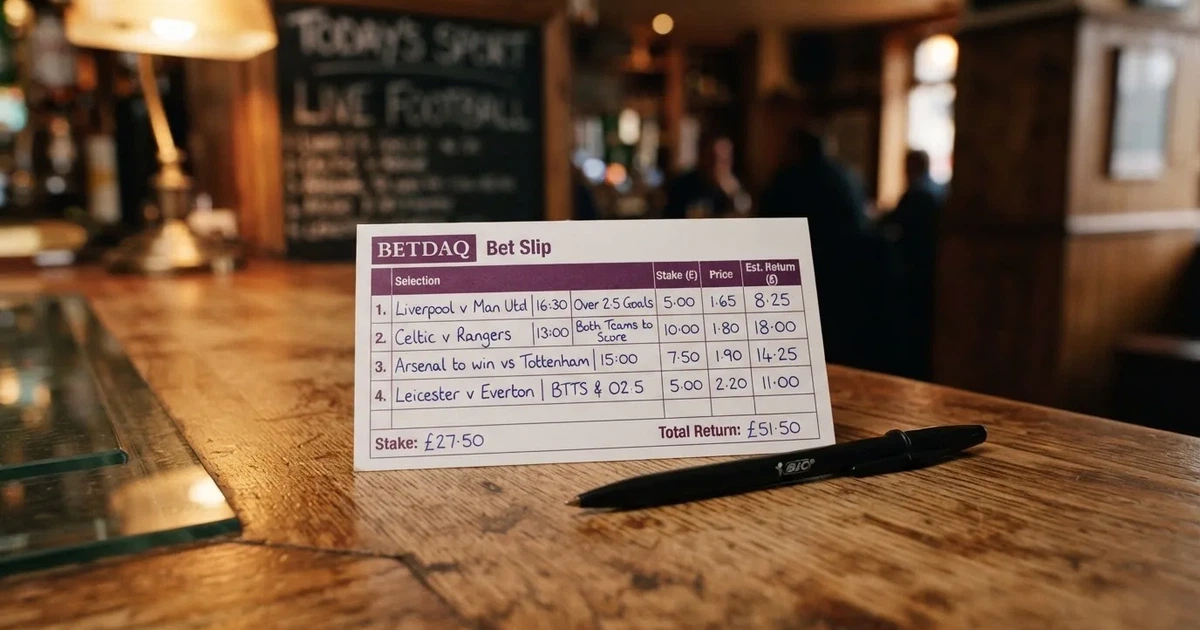
The ten bookmakers and how they compare on accumulators
The ranking below is built from each operator’s own stated terms, the Gambling Commission’s public register, and the acca-specific features the brands publish. No operator in this list is “the only” licensed one — the Commission’s register lists hundreds of remote betting licences — and a place in a comparison is not a licence.
| Brand | Gambling Commission remote licence | What the operator’s own terms state on accumulators |
|---|---|---|
| bet365 | 055148-R-331498-002 — Hillside (UK Sports) ENC | Bet Builder+ combines markets from one event into a single bet, pre-match and in-play; Super Boosts, daily Bet Boosts and Winnings Boosts on Bet Builders and selected singles |
| Geoff Banks | 054095-R-330366-010 — GB Sports Advisors Limited | Live in-play prices and ante-post prices on future events |
| Kwiff | 044448-R-323408-017 — Eaton Gate Gaming Limited | Supercharge can instantly boost the odds on a bet, for example from 2/1 to 20/1, on single or multi bets on any sport |
| Fitzwilliam Sports | 048760-R-335434-009 — SBKI Limited | Prices based on Oddschecker’s average price for each selection; iOS and Android apps |
| Dabble | 065677-R-340363-005 — Dabble Sports UK Ltd | First-deposit welcome of £10 in Free Bets for new customers with a £10 stake, minimum odds, 7-day free bet expiry, stake not returned |
| Swifty Sports | 058957-R-334734-006 — Swifty Global (UK) Ltd | Best Odds Guaranteed, Cash Out on horse racing and football, daily price boosts, live streaming and in-play; Bet Builder listed as coming soon |
| Octobet | 062545-R-337248-006 — Octopus Game Limited | Best Odds Guaranteed on UK and Irish horse racing, capped at £150 per customer per race |
| BetGoodwin | 002927-R-327985-008 — Goodwin Racing Limited | First-deposit welcome of £15 in Free Bets broken into £5 sports, £5 acca and £5 Sub-Cover bets |
| Betfred | 039544-R-319290-010 — Petfre (Gibraltar) Limited | Bet Builder, Sub Switch, Racing Post data, Extra Places, live casino and bingo |
| BetUK | 039198-R-319450-029 — LeoVegas Gaming PLC | Free bets exclude virtual sports, esports and non-UK/IE horse racing; minimum odds apply |
bet365 sits at the top of the shortlist on acca features rather than on price: Bet Builder+ is the most fully-developed same-event builder in the set, the daily price boosts and Super Boosts land directly on accumulators, and the Winnings Boosts on Bet Builders are an explicit acca-side mechanic. Geoff Banks is a smaller, racing-leaning bookmaker whose acca use is incidental to its ante-post focus, so the brand suits the reader who wants horse-racing prices first and an acca on top second. Kwiff’s Supercharge is a one-tap surprise boost on a bet you have already placed, including on a multi, which makes it the strongest “your acca gets lucky” brand in the ranking. Fitzwilliam Sports prices against an industry average rather than its own trading desk, which makes it a useful second opinion on an acca price rather than the place to build one. Dabble, BetGoodwin and BetUK each lead with a free-bet welcome that includes an acca-shaped component or applies to an acca stake, and each carries the standard minimum-odds and expiry conditions the reader should expect. Swifty Sports pairs acca-friendly features — Cash Out, Best Odds Guaranteed — with a Bet Builder that is still listed as coming soon, so the brand suits a horse-racing acca more than a same-game multi. Octobet’s £150 BOG cap per customer per race is a brake on bigger staking plans. Betfred carries Racing Post data and Sub Switch, which makes it the strongest of the set for a racing-led acca with non-runner reshuffling.
Where this ranking falls down
Every operator on this list is licensed by the Gambling Commission for remote general betting on real events. None of them is the only licensed brand. The ranking is built from what each operator’s own terms and app listings state, not from independent price testing, and the Commission register lists hundreds of remote betting licences that are not in this top ten. A reader who wants a brand outside this set — Coral, Ladbrokes, Paddy Power, Betfair, Sky Bet, William Hill, Betway, 888sport, talkSPORT BET, Tote — will find them on the same register, on the same statutory footing.

How an accumulator is built, settled and priced
An accumulator is a single bet that links two or more selections. The whole bet wins only if every leg wins; one losing leg loses the whole stake. A leg that ties — a push — is removed and the price steps down to the remaining legs.
The price you see is the product of every leg’s odds. In decimal form, a four-fold at 1.50, 2.00, 2.50 and 3.00 prices at 1.50 × 2.00 × 2.50 × 3.00 = 22.50, so a £10 stake returns £225 if all four win. In fractional form, the same four-fold would price at roughly 21/2 — the conversion is decimal minus one, written back as a fraction. Decimal suits accumulators because the multiplication is obvious; fractional pricing still appears on the betting slip and on horse-racing markets, and the two forms describe the same underlying price.

The settled price carries the bookmaker’s margin inside every leg. A fair price on a two-outcome market with no margin would be 2.00 on each side, so the bookmaker pays back £2 for every £1 staked no matter who wins. The bookmaker’s prices sit below that fair line, and the gap across all outcomes of one event is the overround. On a football match priced at 1.60 / 4.00 / 6.00 the implied probabilities add to 62.5% + 25% + 16.7% = 104.2%, so the overround is 4.2% — about 4.2p of every £1 staked across the three outcomes is the book’s edge. On an accumulator the margin compounds with every leg: a five-leg acca where each leg carries roughly 5% margin loses around 23% of stake on average across the bet, before any allowance for the chance of a winning leg.
Push rules matter. If one leg of a four-fold pushes, the bet becomes a three-fold at the price of the remaining three legs — the price re-multiplies rather than being reduced proportionally. That is the standard fixed-odds convention and it is what the bookmaker’s settlement screen shows. It is also why a “void” leg and a “losing” leg are not the same: a push lowers the price; a loss ends the bet.
Full-cover bets and accas
A full-cover bet is a structured set of bets that covers every combination of a small number of selections at once, and it is the natural next step up from a plain accumulator.
| Cover | Selections | Bets |
|---|---|---|
| Trixie | 3 | 4 |
| Yankee | 4 | 11 |
| Canadian / Super Yankee | 5 | 26 |
| Heinz | 6 | 57 |
| Super Heinz | 7 | 120 |
| Goliath | 8 | 247 |
A Trixie on three selections is four bets: three doubles and one treble. A Yankee is six doubles, four trebles and one four-fold on four selections. The unit stake is per bet, so a £1 Trixie costs £4 in total; a £1 Heinz costs £57. The acca sits inside the cover as the treble and the four-fold legs — the higher-multiple bets that drive the long-priced return — and the doubles provide a partial payout when two of three or three of four selections win but not all. A Goliath on eight selections is 247 bets and a meaningful stake at unit price, so the cover is the format the reader reaches for when the acca legs look likely but the four-fold or five-fold feels exposed.
The relationship runs the other way too. An accumulator on three selections is the highest-multiple bet inside a Trixie, and that treble is what the reader is really buying the cover for. The doubles and the singles in a Lucky 15 (four selections, 15 bets, four singles and a unit-stake cost that includes the singles) are paid on weaker outcomes, and the singles reduce the value of the four-fold as a “lottery ticket” — a Lucky 15 is a wider safety net than a Yankee, not a bigger payout.
Each-way accumulators
An each-way accumulator is two bets of equal stake. The “win” part pays on the win portion of every leg, and the “place” part pays on the place portion of every leg, at a fraction of the win price set by the race and the operator. The stake doubles — a £10 each-way acca is a £20 total stake — and a winning leg that places but does not win still returns on the place part of the bet, even where the win part is lost.
Each-way suits horse racing more than any other sport. Place terms vary by race type and by the number of runners, and the operator’s own terms page is where they are stated; an each-way acca across a few short-priced favourites at one-quarter the odds is a different proposition from the same acca at one-fifth the odds, and a reader who bets each-way accas should know which scale they are betting at before they place the bet.
What accumulators cost the bettor
The price is the headline, the margin is the cost. An accumulator’s margin is the compounded margin of its legs, and a higher-margin leg is one where the bookmaker’s overround is largest.
A 1X2 football match at 1.60 / 4.00 / 6.00 has the 4.2% margin written out above. The same match priced at 1.45 / 4.50 / 7.00 carries implied probabilities of 69.0% + 22.2% + 14.3% = 105.5% and an overround of 5.5%, and a four-fold of four such matches carries roughly 1 − (0.945)^4 ≈ 21% of stake as expected cost on the bet. The decimal odds compound by the same factor: a four-fold of 1.45 × 4.50 × 7.00 × 1.55 prices at about 70.85, fair price would be about 92.0, and the difference is the bookmaker’s edge across the bet.
Two practical consequences follow. First, the more legs an acca has, the larger the margin and the smaller the payout share on average. Second, the legs an acca is built from matter as much as the count: a four-fold of well-priced 1.20 shots costs less in margin than a four-fold of long-priced 4.00 shots, even though the latter pays more if it wins. Price is what the acca pays when it wins; margin is what it costs on average across all the times it doesn’t.
The law on betting and accumulators in Great Britain
The Gambling Commission licenses the whole commercial market under the Gambling Act 2005, which covers England, Scotland and Wales; Northern Ireland runs on its own older law, so a Great Britain licence is not a Northern Ireland one. Since the Gambling (Licensing and Advertising) Act 2014 an operator whose remote facilities are used in Great Britain needs a Commission licence wherever it is based, and a Curaçao, Maltese or Gibraltar licence is not a substitute.
There is no statutory list of permitted bets or markets. An operator holds a licence for a category — remote general betting standard (real events), remote general betting standard (virtual events), remote general betting limited, remote pool betting, or remote betting intermediary for exchanges — and offers markets under its own rules and the Licence Conditions and Codes of Practice. Every GB-licensed operator on this page holds a remote general betting standard (real events) licence, which is the category that covers accumulators on real sporting events. In-play betting, Bet Builders, price boosts, each-way betting and accumulators themselves are all offered under that licence category, with no statutory cap on what may be bet on or how it is constructed.
The Commission’s public register can be searched by business name, trading name, domain or account number, and it is the whole test of who holds a licence. Every licence in the table above comes from that register; every account number is there for a reader to check. A domain is not proof: licensed operators use .com as well as .co.uk. Minimum age is 18, and name, address and date of birth are verified before a customer can deposit or gamble, including on a free bet or bonus, so no GB-licensed site offers anonymous play.
Spread betting is its own regulator for the financial kind: the FCA oversees financial spread betting, and the Commission oversees the fixed-odds side, which is why a brand like Spreadex shows both. Spread betting losses can exceed the deposit, which is the regulator-required warning the FCA insists on. That warning does not apply to fixed-odds accumulators at a Commission-licensed bookmaker, where the stake is the maximum loss.
Where the rules cost the reader
Three rules in the LCCP and the wider framework change what an accumulator pays or what it takes to withdraw, and a reader who does not know them pays for the surprise.
Wagering requirements on bonuses are capped at 10x since 19 January 2026 — a £10 bonus at 50x wagering needed £500 of bets before, and under the cap needs no more than £100. Mixed-product promotions are banned: an offer that ties betting to casino, bingo or lottery is no longer permitted. The cap applies to bonuses, and whether it applies to free bets with no wagering condition is not established. The reader’s test on a free bet is still the small print: minimum odds on the qualifying bet, expiry, stake-not-returned, and any cap on free-bet winnings.
Identity verification happens before the first bet, not after. A reader who signs up to claim a welcome offer will be asked for photo ID and address before they can deposit, and a first deposit followed by a £14,000 wager will trigger a financial vulnerability check (LCCP condition 3.4.4, in force since 30 August 2024) when deposits minus withdrawals cross £150 in a rolling 30 days, with the second-stage threshold effective since 28 February 2025. It is a public-record check, not an income or credit check, but it is real and it can ask for source-of-funds evidence at higher spend. Deposit limits have been required since 31 October 2025 with a second phase postponed to 30 September 2026, and a state-set ceiling is not in place: the limit is the customer’s choice, set against the operator’s offer screen.
Credit cards are banned for gambling in Great Britain since 14 April 2020, including credit-card-funded e-wallet deposits. Debit cards and bank-based payments are not covered. There is no state list of permitted payment methods and no British named-account rule. Cryptocurrency deposits are not prohibited by statute; what each operator accepts is set in its own terms.
Betting winnings are not taxed on the player in Great Britain; General Betting Duty is the operator’s tax on gross profits, currently 15%, with a 25% remote betting rate applying from 1 April 2027 inside that duty for remote bets other than UK horse racing, self-service betting terminal bets, pool betting and in-person betting. The reader never pays duty on a winning acca; a professional gambler should ask HMRC or an adviser.
Safer gambling and what a GB licence gives the bettor
GAMSTOP is the national multi-operator online self-exclusion scheme and a mandatory licence condition for every online operator since 31 March 2020. A reader who signs up to GAMSTOP is excluded from every GB-licensed online operator for six months, one year, five years, or five years with auto-renewal, and after the minimum period the exclusion stays in place for a further seven years unless the customer asks GAMSTOP to remove it. It covers online sites and apps; betting shops use a separate service. A licence also gives the bettor the Commission’s complaints route and an approved alternative dispute resolution body, plus British consumer protection if funds are withheld. None of that applies to an unlicensed site.
Help is available through GamCare (which runs the National Gambling Helpline), GambleAware, NHS gambling clinics, and Gamblers Anonymous. Each operator on this list has safer-gambling tools in its account: deposit limits, time-outs, self-exclusion, reality checks and the ability to view account history. A reader who feels the spend running away should set a deposit limit first and a time-out second; a reader who feels the spend is already past that should self-exclude through GAMSTOP, not just at one brand, and the GAMSTOP self-exclusion will close the account at every GB-licensed operator the reader has signed up to.
The financial picture on a losing streak is harder than the legal one. A licensed operator will not extend credit, will not let a credit card into the account, and will run a vulnerability check at higher spend. It will also pay out a winning acca. An unlicensed site has none of those rails and none of those obligations, which is why the legal test for the reader is the Commission’s register, not the brand name.
Bonuses, free bets and what an acca welcome is actually worth
A free bet is a credit the operator stakes for you; the winnings are paid back into the withdrawable balance, but the stake usually is not. A £10 free bet at 5.00 that wins pays £40 — £50 return minus £10 stake kept by the operator — and the £40 is yours to withdraw or bet again subject to any further conditions. A free bet on an accumulator is a free bet on a single stake whose price is the product of every leg, so the £10 free bet at the same 22.50 four-fold pays £215 rather than £225, and the difference is the stake the operator kept.
Welcome offers in this ranking vary in how acca-shaped they are. The most acca-direct is BetGoodwin, which breaks its £15 free-bet welcome into £5 sports, £5 acca and £5 Sub-Cover bets. Dabble offers £10 in Free Bets on a £10 first deposit for new customers, with a 7-day expiry and the stake not returned. BetUK’s free bets exclude virtual sports, esports and non-UK/IE horse racing, and minimum odds apply. None of the welcome offers above is universal; the conditions sit in each operator’s own terms and a reader who claims without reading them is betting at the operator’s house rules.
Two limits to read before claiming. The first is the wagering requirement: the 10x cap that came in on 19 January 2026 means a £10 bonus no longer needs more than £100 of qualifying bets before the bonus funds are withdrawable, and an offer that requires it is now bounded. The second is the cap on free-bet winnings: a free bet that promises “winnings paid in cash” still has a ceiling on what those winnings are, and that ceiling sits in the small print. A cap of £2,000 on free-bet winnings is the kind of figure a reader meets only when the win lands; reading it before the bet is the difference between a free-bet win that pays out and a free-bet win that gets clipped at the cap.
Enhanced odds and acca insurance are different mechanisms. An enhanced-odds offer boosts the price on a named selection — the operator pays you at a higher price than its own screen — and the stake is usually not returned. Acca insurance refunds the stake as a free bet if one leg lets you down, which is a partial-acc-cover for a long-priced multi rather than a margin cut. Both are marketing wrappers around the same underlying bet: the acca still pays the margin inside every leg, the insurance only changes the outcome of one losing leg.
Price boosts and Super Boosts are the cleanest acca-side mechanism in this ranking. bet365’s daily Bet Boosts and Super Boosts land on named selections, the price is higher than the screen price, and the boost applies whether the selection is bet as a single or as a leg of an acca. Winnings Boosts on Bet Builders and selected singles are a separate mechanic: they pay extra winnings on a winning bet rather than raising the price, which matters for an acca where the boost is on the whole bet rather than on one leg.
Predictions, tipsters and what the page is not
The page does not name winners. An accumulator’s return depends on outcomes the page cannot know, and the only honest framing is that every prediction on the market is a tipster’s view, not a fact. A tipster sells a service, a model sells a method, and neither sells a result. The reader’s job is to read the price, read the margin, read the conditions, and place the bet knowing the cost is the compounded margin and the upside is the multiplied price — and the downside is a losing leg that ends the whole bet.
What the reader can do is structural. A short acca at high prices on well-priced legs is a different bet from a long acca at low prices on a wide range of events, and the difference shows up in the margin: the short acca’s compounded margin is closer to the single-match margin, the long acca’s compounded margin is several times larger. A cover bet in 4 or 11 lines at unit price is a partial payout on weaker outcomes rather than the all-or-nothing of a plain accumulator. An each-way acca is two bets of equal stake, and the cost is the doubled stake and the place terms on every leg.
A reader who follows tipsters should treat the price on the betting slip as the only fact the tipster’s view cannot change. The tipster’s job is the pick; the price is the bookmaker’s; the margin is the bookmaker’s; and the conditions are the bookmaker’s. The reader’s job is the cost.
What the bookmaker’s margin does to an accumulator
The bookmaker’s margin is the share of every pound staked across one market that the bookmaker keeps on average. It is the gap between the implied probabilities of every outcome and 100%, and it shows up directly in the price the bettor sees.
A 1X2 football match at 1.60 / 4.00 / 6.00 prices at implied probabilities of 62.5% + 25.0% + 16.7% = 104.2%. The 4.2% gap is the margin. The fair price on each outcome would have been 1.66 / 4.00 / 6.00, paying back £2 for every £1 across all outcomes. The bookmaker pays back £1.92 instead — the 4.2% kept by the bookmaker.
On an accumulator the margin compounds. A four-fold where every leg carries roughly 4% margin pays back (1 − 0.04)^4 ≈ 85% of stake across the bet, which is the same as saying roughly 15% of every pound staked across the bet is the book’s edge. A five-fold at the same per-leg margin pays back about 82%, an eight-fold about 72%, a ten-fold about 66%. The longer the acca, the more the bookmaker keeps.
Two readers should think about this differently. A casual bettor who places a four-fold acca once a month is paying a small compounded margin on a small stake, and the cost is the price of admission. A serious bettor who places ten accas a week at six legs each is paying roughly 26% of stake as expected cost across the bets, which is a different proposition and worth checking against the kind of return the betting history actually produces.
What a winning accumulator pays back
The arithmetic of an accumulator is the multiplication of the legs and the multiplication of the stake. A £10 acca at 22.50 returns £225 if it wins; the net profit is £215. A £2 each-way Trixie on three selections has 4 bets at £2 each, so the total stake is £8, and a winning treble at the multiplied price pays the treble leg at the multiplied price and the doubles at their multiplied prices.
Worked example, decimal odds. A four-fold at 1.50, 2.00, 2.50 and 3.00 multiplies to 22.50; a £10 stake returns £225. A £20 stake returns £450. A winning treble at 2.00, 2.50 and 3.00 multiplies to 15.00; a £10 stake returns £150. A winning double at 1.50 and 2.00 multiplies to 3.00; a £10 stake returns £30. A £2 each-way Trixie on three selections at 1.50, 2.00 and 2.50 has 4 bets at £2 each, £8 in total, and a winning treble at 7.50 pays £15 win plus the £2 place part at one-fifth the odds. The arithmetic is mechanical once the format is fixed.
Worked example, fractional odds. The same four-fold at 1/2, evens, 6/4 and 2/1 prices in fractional form at 1/2 × 1/1 × 6/4 × 2/1 = 1/2 × 1 × 3/2 × 2 = 3/2 × 2 = 3, so 3/1 in fractional form, or 4.00 in decimal form. A £10 stake returns £40. The conversion runs a/b → a ÷ b + 1, so 3/1 → 3 ÷ 1 + 1 = 4.00, 11/4 → 11 ÷ 4 + 1 = 3.75, 5/2 → 5 ÷ 2 + 1 = 3.50. Decimal odds suit accas because the multiplication is direct; fractional odds describe the same underlying price in a form the reader sees on horse-racing cards.
A push rule on a four-fold reduces the bet to a three-fold at the price of the remaining three legs, and the stake is returned in full on the affected leg as if the leg had been declared void. The settlement screen at the operator shows the new price; the betting slip does not always show it before the leg pushes.
Bet Builder, Cash Out and the in-play side of accumulators
Bet Builder is the brand name most UK operators use for a same-game multi — a bet that combines several markets on one event into a single price. bet365’s Bet Builder+ is the most developed of the set in this ranking, combining markets from one event into a single bet pre-match and in-play. Betfred carries Bet Builder, Sub Switch, Racing Post data and Extra Places; Swifty Sports lists its Bet Builder as coming soon. Bet Builder on a Premier League fixture might combine match result, total goals, both teams to score and first goalscorer into one bet, and the price is the product of the underlying markets with a margin added across the combined bet.
Cash Out is a settlement option the operator offers before the bet is fully resolved, and it lets the bettor lock in a return — usually lower than the full-bet return — before the last leg is decided. Cash Out on accumulators is offered by several brands in this ranking, including Swifty Sports on horse racing and football, and the price the operator offers is the operator’s own view of the remaining legs at that moment. A bettor who Cashes Out a winning four-fold after three legs have won is selling the last leg back to the operator at a discount, and the size of the discount is the operator’s edge on the offer.
In-play accumulators are built during the event, leg by leg, with prices updated as the event unfolds. The margin on each in-play leg is typically wider than the pre-match margin because the bookmaker is pricing into uncertainty, and the compounded margin on an in-play acca is therefore larger than on a pre-match acca of the same shape. Kwiff’s Supercharge lands on a placed bet, single or multi, and the boost is applied to the bet the bettor has already placed rather than to a screen price.
The ten operators in detail
bet365
bet365 holds Gambling Commission remote licence 055148-R-331498-002, with Hillside (UK Sports) ENC as the licence holder. The brand’s acca-side mechanics are the strongest in this ranking: Bet Builder+ combines markets from one event into a single bet, available both pre-match and in-play; Super Boosts and daily Bet Boosts raise the price on named selections; and Winnings Boosts on Bet Builders and selected singles pay extra on a winning bet rather than raising the price. The acca-shaped features are explicit, and the operator’s terms are the clearest on what the boost pays out and on which markets. The verdict: the strongest acca brand in the ranking on same-event building, daily price boosts and acca-side winnings boosts, and the first port of call for a reader who wants the acca-side mechanics the rest of the set approximates.
Geoff Banks
Geoff Banks holds Gambling Commission remote licence 054095-R-330366-010, with GB Sports Advisors Limited as the licence holder. The brand is published by GB Sports Advisors Ltd and the offering leans horse-racing: live in-play prices and ante-post prices on future events. Accumulators sit on top of the racing card rather than at the centre of it, and a reader who wants a racing-led acca with ante-post leg options will find the brand useful, while a reader who wants a same-game multi should look elsewhere. The verdict: a useful second bookmaker for a racing-led acca, not the place to build a same-game multi.
Kwiff
Kwiff holds Gambling Commission remote licence 044448-R-323408-017, with Eaton Gate Gaming Limited as the licence holder. The brand describes itself as a trademark operated by Spryme Ltd and the app carries a 17+ age rating. Supercharge can instantly boost the odds on a bet, for example from 2/1 to 20/1, and it can apply to single or multi bets on any sport, which makes it the strongest “your acca gets lucky” brand in the ranking. The brand is licensed and the boost mechanic is real, but the boost is not a margin cut — it is a stochastic feature on top of the underlying price. The verdict: the strongest surprise-boost brand in the ranking, but the boost is a stochastic perk rather than a consistent price cut.
Fitzwilliam Sports
Fitzwilliam Sports holds Gambling Commission remote licence 048760-R-335434-009, with SBKI Limited as the licence holder. The brand’s differentiator is its pricing model: prices are based on Oddschecker’s average price for each selection, and the brand is positioned as a price-taker rather than a price-maker. The iOS and Android apps are the customer-facing surface, and the acca is built on top of the average-price card. The verdict: a useful second opinion on an acca price, though it sits on the average rather than beating the market.
Dabble
Dabble holds Gambling Commission remote licence 065677-R-340363-005, with Dabble Sports UK Ltd as the licence holder. The welcome offer is a £10 free bet for new customers on a £10 first deposit, with minimum odds, a 7-day free bet expiry and the stake not returned. The free-bet terms are standard for the market and the brand is licensed, but the welcome is a sports-bet welcome rather than an acca-specific one, and a reader who wants the welcome applied to an acca should check the qualifying market before staking. The verdict: a licensed brand with a standard free-bet welcome, provided the reader checks that the qualifying market allows for an acca stake.
Swifty Sports
Swifty Sports holds Gambling Commission remote licence 058957-R-334734-006, with Swifty Global (UK) Ltd as the licence holder. The brand pairs Cash Out on horse racing and football, Best Odds Guaranteed, daily price boosts, live streaming and in-play with a Bet Builder that is listed as coming soon. The acca-friendly features are in place, but the same-game multi is not. The verdict: a strong choice for racing accas with BOG and Cash Out, though the Bet Builder suite is still pending rollout.
Octobet
Octobet holds Gambling Commission remote licence 062545-R-337248-006, with Octopus Game Limited as the licence holder. The brand’s distinctive acca-adjacent feature is Best Odds Guaranteed on UK and Irish horse racing, capped at £150 per customer per race. The cap is the brake: a reader staking more than £150 on a single race will not get BOG above the cap, and a high-staking plan should know that before placing the bet. The verdict: a licensed brand with BOG on UK and Irish racing, but high-stakes bettors should note the £150 cap per race.
BetGoodwin
BetGoodwin holds Gambling Commission remote licence 002927-R-327985-008, with Goodwin Racing Limited as the licence holder. The brand’s welcome is a £15 free-bet bundle broken into £5 sports, £5 acca and £5 Sub-Cover bets, and it is the most acca-shaped welcome in this ranking. The bundle is welcome-shaped rather than margin-cut, so the reader still pays the margin inside every leg. The verdict: the most acca-shaped welcome in the ranking, though the bundle structure means the margin inside each leg remains.
Betfred
Betfred holds Gambling Commission remote licence 039544-R-319290-010, with Petfre (Gibraltar) Limited as the licence holder. The brand carries Bet Builder, Sub Switch, Racing Post data and Extra Places, with live casino and bingo on the same app. The acca-side mechanics are racing-led rather than same-game-led, and a racing-led acca with non-runner protection is the brand’s strongest shape. The verdict: the strongest racing-led acca bookmaker in the ranking on non-runner protection and Extra Places, with the caveat that the same-game multi is racing-adjacent rather than the brand’s main event.
BetUK
BetUK holds Gambling Commission remote licence 039198-R-319450-029, with LeoVegas Gaming PLC as the licence holder. The brand’s free bets exclude virtual sports, esports and non-UK/IE horse racing, and minimum odds apply. The exclusions are the brand’s own, set in its own terms, and a reader who bets virtual sports or non-UK/IE racing should know the free bet will not land. The verdict: a licensed brand with a standard free-bet welcome, with the caveat that the free-bet exclusions cover the racing and esports markets a casual bettor might naturally reach for.
Offshore and what an unlicensed site does not give the bettor
A GB licence is compulsory at the point of consumption. Providing gambling facilities in Great Britain without the licence the Act requires is an offence under section 33 of the Gambling Act 2005, aimed at the operator — up to 51 weeks’ imprisonment, a fine up to level 5, or both on summary conviction in England and Wales, and six months in Scotland. No offence aimed at a customer who merely bets on an unlicensed site was found in the framework. The reader’s loss on an unlicensed site is the protection: no GAMSTOP coverage, no Commission complaints route, no approved alternative dispute resolution body, no British consumer redress if funds are withheld, and no obligation on the operator to honour the 10x bonus cap, the £150 vulnerability check, or any of the safer-gambling tools a licensed operator runs.
Enforcement is disruption rather than blocking: cease-and-desist notices, search-engine referrals, work with registrars, hosts and payment providers. The Commission has been given, or is about to receive, court-order DNS blocking powers — that is not the same as ISP blocking being in operation. Honest framing: licensed means checks, limits, GAMSTOP, the bonus cap, and identity verification before the first bet; unlicensed means none of those protections and a real chance of withheld funds. Neither is “the safe choice” by default, and the test for the reader is the Commission’s register, not the brand name.
Frequently asked questions
What is an accumulator bet?
An accumulator — also called a parlay, acca, combo bet or multi — is a single bet that links two or more individual wagers into one. The whole bet wins only if every leg wins; one losing leg loses the whole stake. The price is the product of every leg’s odds, so the longer the acca and the longer the prices, the larger the potential return and the smaller the chance of it landing. A push on a leg removes that leg and reduces the price to the remaining legs, rather than voiding the bet.
How does an accumulator work in practice?
The reader picks two or more selections, the betting slip multiplies the prices into one acca price, and the stake is placed once on the combined bet. The bookmaker settles each leg separately: a winning leg stays in, a losing leg ends the bet, a push drops out and the price steps down. The payout on a winning acca is the stake multiplied by the final acca price; the stake is not returned separately because it is already inside the price. The margin inside every leg compounds across the bet.
Can you use acca freeze on free bets?
Acca freeze is a brand-specific feature and its terms are set by the operator that offers it. A free bet has its own conditions in the operator’s terms — minimum odds, expiry, stake-not-returned, any cap on winnings — and those conditions sit on top of any acca-specific feature. A reader who wants acca freeze on a free bet should check the operator’s terms for the brand on which the feature is offered, because the feature and the free bet are independent mechanics and the free bet’s conditions win where they conflict.
How do I check that a bookmaker holds a Gambling Commission licence?
The Commission’s public register can be searched by business name, trading name, domain or account number, and the licence category is shown alongside. A GB-licensed remote bookmaker shows a remote general betting standard (real events) or equivalent category, and the licence holder named on the register is the legal entity behind the brand. Every licence in the table above is on that register. A domain ending in .com or .co.uk is not proof either way; the register is the test.
How is the return on a bet worked out from the stake and the odds?
For a single bet, return = stake × decimal odds, and net profit = stake × (decimal odds − 1). For a combination bet such as an accumulator, the price is the product of every leg’s odds, so a four-fold at 1.50, 2.00, 2.50 and 3.00 prices at 22.50 and a £10 stake returns £225. Fractional odds convert by decimal minus one, written as a fraction: 3/1 → 4.00, 11/4 → 3.75, evens → 2.00. The return always includes the stake because the stake is inside the price.
What is the bookmaker’s margin and how does it show up in the odds?
The margin is the share of every pound staked across one market that the bookmaker keeps on average. It is the gap between the implied probabilities of every outcome and 100%: a 1X2 football match priced at 1.60 / 4.00 / 6.00 has implied probabilities of 62.5% + 25% + 16.7% = 104.2%, and the 4.2% gap is the margin. On an accumulator the margin compounds with every leg: a five-fold where each leg carries roughly 5% margin loses around 23% of stake on average across the bet, before any allowance for the chance of a winning leg. The reader’s test is the implied probability on the betting screen, the gap across all outcomes, and the compounded gap across every leg of the acca.
Bet types & in-play – Racingtipshub.com
Content created by the «Racingtipshub.com» team
