
Best Betting Sites With Apple Pay: What the Terms Actually Cost
 Available in US
Content analysis of ten Gambling Commission-licensed bookmakers that accept Apple Pay, showing what the methods, offers and free bets on each site actually cost the punter.
Prices, licence entries and operator claims were verified against the Gambling Commission’s public register on October 30, 2026.
Apple Pay has been on the cashier page of British bookmakers for the best part of a decade. The question is no longer whether it works, but what it costs — how much you need to deposit, how fast winnings come back, and what each operator’s small print charges on top. Ten Gambling Commission-licensed bookmakers accept Apple Pay today, and they do not all charge the same price for the privilege. This comparison ranks them by cost: the deposit floor, the offer attached to a first deposit, the turnaround on a withdrawal, and the conditions the terms bury in the back.
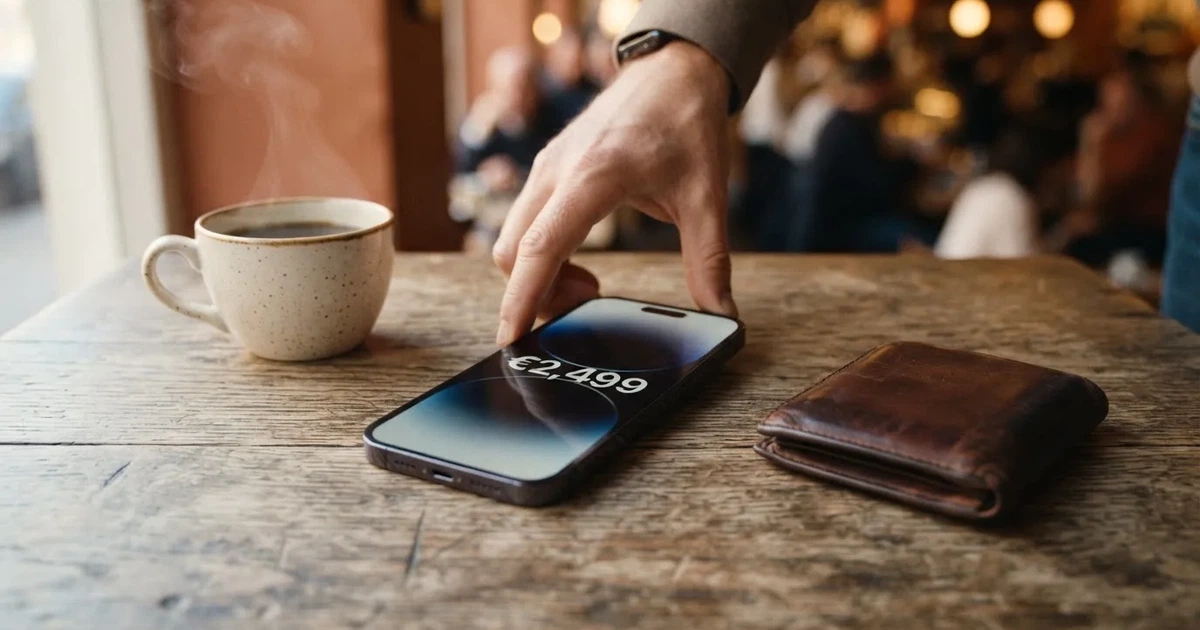
The framing matters because Apple Pay itself is free at the point of use. No fee for processing is added by any operator listed here, and the card underneath (a debit card in nearly every case) is funded from a bank account the punter already holds. What costs money is the offer attached to the deposit, the wagering the offer requires, and the vig baked into the odds. Apple Pay is the pipe; the price is everything around it.
The ten sites at a glance
| Bookmaker | Gambling Commission licence | Position on Apple Pay |
|---|---|---|
| BoyleSports | 039469-R-319383-025 (Boylesports Enterprise) | Accepted via the app |
| Star Sports | 009177-R-104555-019 (Star Racing Limited) | Accepted via the app |
| QuinnBet | 061011-R-335683-004 (QuinnBet Gibraltar) | Debit cards, Apple Pay and OpenBanking; Revolut cards accepted; Skrill and Neteller rejected |
| Coral | 054743-R-330863-014 (LC International Limited) | Apple Pay supported through the main cashier |
| Fitzdares | 000400-R-103839-030 (Fitzdares Limited) | Apple Pay, Mastercard and Visa; Mastercard withdrawals can take up to 48 hours |
| Unibet | 045322-R-324275-019 (Platinum Gaming Limited) | Deposit by debit card or instant bank transfer |
| Bet Ahoy | 100094-R-341742-003 (Bet Ahoy Ltd) | Deposit via Apple Pay |
| NetBet | 039170-R-319343-032 (Netbet Enterprises Limited) | Apple Pay, PayPal, debit card and Instant Payments to bank |
| bet365 | 055148-R-331498-002 (Hillside UK Sports ENC) | Debit card, PayPal and Apple Pay |
| DAZN Bet | 048756-R-327274-019 (DZBT Limited) | Debit card, Apple Pay, Paysafecard, Trustly and Skrill from £5; PayPal from £20 |
Every entry in that table is a remote general betting standard (real events) licence against a business name the Commission’s register lists. The site addresses are not printed here because the register, not the domain, is the test. Several large groups operate more than one of these brands from a single licence — Ladbrokes and Coral sit on LC International Limited, for example, and Paddy Power and Betfair share Entain — so the count of ten is ten brands, not ten independent companies.

How Apple Pay works on a betting site
Apple Pay is a digital wallet built into iPhone, iPad, Apple Watch and Mac. Apple launched it on 20 October 2014 with US-issued cards only, and the UK followed on 14 July 2015. The system works through tokenisation: at enrolment, the real card number is replaced with a device-specific Device Primary Account Number, and a dynamic security code is generated for each transaction. In a shop the wallet talks to a contactless terminal through near-field communication; on a website or in an app, the wallet opens in a pop-up that the device’s biometric check (Face ID or Touch ID, or a passcode) authorises.
For a punter, that means three things matter. First, the card behind the wallet is the funding source, and the rules on that card apply — a credit card is banned for gambling in Great Britain since 14 April 2020, so the only working route is a debit card or a bank-funded e-wallet. Second, the device check replaces typing the card details into the cashier: the punter approves the payment on the phone, not on the bookmaker’s page. Third, the bookmaker receives a tokenised number, not the long card number, so the data the site stores in custody of the deposit is narrower than a typed card payment.

The bookmaker does not see Apple as a payment method in the regulatory sense. Apple Pay is a presentation layer over a debit card the punter already owns. That matters for the terms: a minimum-deposit rule written for “debit cards” covers Apple Pay at every operator listed here, and a withdrawal rule written for “Visa” or “Mastercard” covers Apple Pay-funded deposits at most of them. Where an operator singles Apple Pay out, the table below names it.
What the Gambling Commission register proves — and what it does not
The Gambling Commission is the regulator for commercial gambling in Great Britain under the Gambling Act 2005. A bookmaker offering remote betting to customers in Great Britain needs a Commission licence wherever the operator itself is based, since the Gambling (Licensing and Advertising) Act 2014 closed the route of licensing in a home jurisdiction and serving the British market from there. A Curaçao, Malta or Gibraltar licence is not a substitute. The Commission’s public register lists every licence holder by business name, trading name, domain and account number, and it is the whole test of who is licensed. A site address ending in .com rather than .co.uk proves nothing; licensed operators use both.
The register also distinguishes categories. Remote general betting standard (real events) is the licence that covers sports betting. Remote general betting standard (virtual events) covers computer-generated events. Pool betting has its own category. A betting exchange runs under remote betting intermediary. The ten brands here all hold the first of those, which is what a punter looking for a sportsbook needs to see.
What the register does not do is rank. A licence is permission to operate, not a mark of quality. The Commission’s published enforcement record is the closest the register comes to a quality signal, and the rest of the comparison on this page comes from each operator’s own published terms and from what its app and site actually expose to a customer.
What the credit-card ban and the verification rules cost the punter
Two rules shape the cost frame for any Apple Pay deposit at a British bookmaker. The first is the credit-card ban: since 14 April 2020 no licensed operator may accept a credit card for gambling, including a credit card funded through an e-wallet. Apple Pay running off a credit card is therefore declined at the register; Apple Pay running off a debit card is fine. The second is verification before the first deposit: since 7 May 2019 a licensed operator has had to confirm the customer’s name, address and date of birth before any deposit or bet, including with a free bet or a bonus. That means no anonymous play at any site in this comparison, and it means the wallet’s biometric check is the second layer of identity, not the first.
A financial vulnerability check has applied since 28 February 2025 once a customer’s net deposits cross £150 in a rolling 30 days. The check looks at public records (bankruptcy, county court judgments) rather than income or credit history, and the punter is asked for source-of-funds information where the picture is unclear. None of that touches the cost of a single deposit, but it sets a ceiling on the kind of bonus play that can run without further questions: a bonus with a high wagering factor multiplies deposits quickly into the territory where a vulnerability check fires.
A second layer is the bonus cap that took effect on 19 January 2026. Wagering requirements on bonuses are now capped at 10x: a £10 bonus at 50x needed £500 of qualifying bets; under the cap no operator may require more than £100 of qualifying bets to clear a £10 bonus. Mixed-product promotions — an offer that requires gambling on two or more product types, such as betting plus casino — are banned. The cap does not cover bonuses with no wagering requirement, and the law does not set a cap on the money value of a bonus itself. What the cap does is flatten the worst of the bonus terms, so an offer that once asked for fifty times playthrough now asks for ten at most.
Safer gambling tools each operator must offer
Every operator listed here must offer a deposit limit on a fixed time frame, a reality check, time-out, and self-exclusion through GAMSTOP. The minimum standards are the same; the surface differs.
Unibet’s safer gambling tools include deposit limits, a Player Profile test, product restrictions and self-exclusion, with live chat support and links to BeGambleAware, GamCare, GAMSTOP, Gambling Therapy and the BGC. Star Sports provides deposit limits, a Play Break facility and self-exclusion in My Account. Midnite, where it accepts Apple Pay among other methods, links to GambleAware, GamCare, GamStop and BetBlocker from the footer.
GAMSTOP itself is the national multi-operator self-exclusion scheme. A customer can register for six months, one year, five years, or five years with auto-renewal, and after the minimum period the exclusion stays in place for a further seven years unless the customer asks GAMSTOP to remove it. GAMSTOP covers online sites and apps; betting shops use a separate service. Once registered, the punter cannot deposit or open an account at any GB-licensed online operator for the chosen period, and the operator is required to enforce it.
Help that is not the operator’s own: GamCare runs the National Gambling Helpline, GambleAware funds treatment and the NHS gambling clinics, and Gamblers Anonymous runs peer-support meetings. These are independent of the bookmaker, and they are the route a punter takes when the safer-gambling tools on a single site are not enough.
Crypto, anonymity and Apple Pay
No GB-licensed operator takes cryptocurrency deposits, and the Commission’s published register carries no rule either permitting or prohibiting them; the absence of a rule is not permission, and licensed operators do not, in practice, list them. Anonymous betting sites do not exist at the licensed end of the British market: verification before the first deposit is the rule, and an Apple Pay token is bound to a real card in a real name.
The search phrases that turn up “anonymous Apple Pay betting” or “no-KYC Apple Pay betting” are aimed at offshore operators, and the cost of those is not in the odds but in what the punter gives up. The Commission has set out, and the comparison frame of this page reflects, the consequences plainly: no GAMSTOP coverage, no Commission complaints route, no approved dispute-resolution body, no British consumer redress if funds are withheld, and no protection under the 10x bonus cap or the £150 vulnerability check. A punter playing at an offshore bookmaker may also find that the operator holds the balance in a currency other than sterling, that withdrawal times run to weeks rather than days, and that a dispute over a settled bet has no domestic route.
The honest read is that Apple Pay at a GB-licensed bookmaker is the opposite of anonymous: the card behind the wallet identifies the punter to the bank, the bank identifies the punter to the wallet provider, and the operator verifies the punter before the first deposit. The wallet adds a layer of device authentication on top. Anonymity, where it is offered at all online, lives at the offshore end, and the price of anonymity there is the loss of every safeguard listed above.
Bonuses, free bets and the real cost of an offer
Every offer below is described as the operator’s own terms state it. The headline number is rarely the number the punter clears.
Coral’s sports welcome offer grants £40 in free bets upon a £20 qualifying sports wager. The deposit and qualifying bet must be placed at minimum odds of 2.0 (1/1); the £40 free bets are issued within 7 days and expire after a further week, available to new GB customers opting in. At 2.0 odds, the backer’s implied probability is 50%, and any selection priced lower fails to qualify.
Unibet offers a comparable ‘Bet £20, Get £40 in Free Bets’ promotion, requiring a £20 wager at minimum odds of 2.0 (1/1). Free bets expire within 7 days. This bonus is available to new GB customers depositing via debit card or instant bank transfer; an Apple Pay deposit sourced from a debit card qualifies.
Bet Ahoy offers a 10% Acca Bonus up to £1,000, Sub-Cover for player substitutions, Best Odds Guaranteed on UK and Irish horse and greyhound racing up to £100, and Double Result payout on UK and Irish racing. None of those is a free bet on first deposit; they are continuing offers on accumulator and racing markets.
The arithmetic of a “free bet” matters because the stake is usually not paid back with a win. A £20 free bet at odds of 3.00 returns £40 of profit, not £60 of return, so the punter’s effective price on the bet is the odds minus one, multiplied by the throw. Where the offer is “free spins” or a casino credit it sits under a different licence category and a different set of rules, and that is why mixed-product offers are banned under the January 2026 cap.
A bonus that asks for turnover at 10x is, on a £10 bonus, a £100 playthrough requirement; at 50x it would have been £500. The cap means the largest sum a punter must turn over to clear a £10 bonus at any GB-licensed operator is £100. That is the hard ceiling, not the floor — many bonuses ask for less — and the punter’s task is to read the offer terms against that ceiling before opting in.
Deposits, withdrawals and the speed of money
Apple Pay deposits clear immediately, and at every operator in this comparison the deposit floor is the same as the deposit floor for a debit card: typically £5 to £10, with QuinnBet and DAZN Bet naming £5 as the floor and most others sitting at £5 or £10.
DAZN Bet’s deposit methods start at £5 by debit card, Apple Pay, Paysafecard, Trustly and Skrill, and at £20 by PayPal, with no processing fees. QuinnBet accepts debit cards, Apple Pay and OpenBanking, plus Revolut cards, and does not accept Skrill or Neteller deposits. NetBet supports Instant Payments to bank, Apple Pay, PayPal and debit card, with Face ID or Touch ID login on supported devices. bet365 accounts can be funded by debit card, PayPal and Apple Pay, with Face ID on supported devices.
On the withdrawal side, the wallet matters less than the rail. Apple Pay-funded deposits typically refund to the same card; where the card is a Visa debit, Visa withdrawals are usually same-day at most operators, and Fitzdares names same-day for Visa. Mastercard withdrawals at Fitzdares can take up to 48 hours. bet365, Coral and Unibet run the cards through their own rails, and the published times sit inside the 24-hour band for Visa debit and inside 48 hours for Mastercard.
The cost of withdrawal is processing fees, and at every operator listed here processing fees on Apple Pay-funded withdrawals are zero. The cost the punter pays is the vig inside the odds: a market margin of 5% on a typical 1X2 football match returns 95% to backer and operator in aggregate, and the operator’s 5% is the structural cost of every bet, regardless of how it is funded. The payment method does not change that figure; it changes how fast the punter can redeploy the winnings.
BoyleSports — early payouts on the major sports
BoyleSports operates under Gambling Commission remote licence 039469-R-319383-025, held by Boylesports Enterprise. The Commission account number is 39469, and the operator’s site is accessible via their registered domain.
The brand offers early payouts on selected sports: football if a team goes 2 goals ahead, basketball at 20 points ahead, rugby and NFL at 16 points ahead, and boxing after a knockdown. That is the early-payout frame that distinguishes the book from a generic sportsbook: a settled accumulator or single bet pays out before the final whistle on those triggers, which changes the punter’s exposure to a late swing.
The site sits under the same Commission’s register as any of the larger Irish-origin bookmakers, and the early-payout rules are the most concrete edge the operator publishes on the app. Where a punter builds a Saturday acca around a Premier League fixture and a Six Nations match, the early-payout rule cuts the tail risk on the leading leg.
Star Sports — racing-shaped, with safer gambling in My Account
Star Sports is operated under Gambling Commission remote licence 009177-R-104555-019, held by Star Racing Limited at the registered domain starsportsbet.co.uk. The Commission’s account number is 9177.
The operator’s safer gambling surface includes deposit limits, a Play Break facility and self-exclusion in My Account, and the app is available in the UK and Ireland. The brand’s roots are in on-course bookmaking, and the digital product reflects that: racing markets are central, and the safer-gambling tools sit on a My Account tab rather than buried in a help menu.
For a punter whose betting runs through horse and greyhound racing, the surface is familiar; for a punter whose betting is football-only, the operator is a competent second-string rather than a primary account.
QuinnBet — accepts the wallet, declines the e-wallets
QuinnBet holds Gambling Commission remote licence 061011-R-335683-004, with QuinnBet (Gibraltar) Limited as the licensee. The account number is 61011, and the service is offered via the operator’s registered domain.
The cashier accepts debit cards, Apple Pay and OpenBanking, plus Revolut cards, and does not accept Skrill or Neteller deposits. The exclusion of Skrill and Neteller is the kind of detail that matters when an offer is funded through an e-wallet, because some welcome bonuses exclude e-wallet deposits from qualification. By naming the cashier openly, QuinnBet short-circuits that question for the punter who would otherwise have to read the small print.
The shape is a mid-market bookmaker with a clean funding list and a Commission licence behind it.
Coral — the £40-in-free-bets welcome
Coral is operated under Gambling Commission remote licence 054743-R-330863-014, with the licence held by LC International Limited and the registered domain coral.co.uk. The Commission’s account number is 54743.
New GB customers who opt in can access a ‘Bet £20, Get £40 in Free Bets’ welcome bonus, subject to a £20 minimum stake at 2.0 (1/1) odds or greater. The £40 in free bets are credited within 7 days and expire after another 7 days. It is critical to note the minimum odds; selections below 2.0 do not qualify for the bonus, and the expiry window is brief.
Coral sits in the Entain group, and the underlying operator is large enough that withdrawal times on Visa debit are typically inside 24 hours.
Fitzdares — premium positioning, named withdrawal times
Fitzdares is licensed by the Gambling Commission under remote licence 000400-R-103839-030, held by Fitzdares Limited. The Commission account number is 400, and the platform is available at the operator’s registered domain.
The cashier accepts Apple Pay, Mastercard and Visa. Visa withdrawals are usually same-day; Mastercard withdrawals can take up to 48 hours. Naming those windows explicitly is unusual and useful — most operators describe withdrawal times in vaguer language. The Mastercard lag is the rail, not the operator: a card network settlement at 48 hours is the upper end of the British online-betting norm.
The brand positions itself as a premium bookmaker, and the published withdrawal windows match that frame.
Unibet — established operator, named funding routes
Unibet is operated under Gambling Commission remote licence 045322-R-324275-019, held by Platinum Gaming Limited, Gibraltar, at the registered domain unibet.co.uk. The Commission’s account number is 45322.
The operator has been active since 1999. Its UK welcome promotion provides £40 in free bets following a £20 qualifying sports bet at odds of 2.0 (1/1) or higher. Free bets remain valid for 7 days. This offer is open to new GB customers using instant bank transfers or debit cards; Apple Pay funded via a debit card is accepted.
Safer gambling tools include deposit limits, a Player Profile test, product restrictions and self-exclusion, with live chat support and links to BeGambleAware, GamCare, GAMSTOP, Gambling Therapy and the BGC. The Unibet suite is the broadest safer-gambling surface in this comparison.
Bet Ahoy — accumulator bonus and racing features
Bet Ahoy is operated under Gambling Commission remote licence 100094-R-341742-003, held by Bet Ahoy Ltd at the registered domain betahoy.co.uk. The Commission’s account number is 100094.
The book offers a 10% Acca Bonus up to £1,000, Sub-Cover for player substitutions, Best Odds Guaranteed on UK and Irish horse and greyhound racing up to £100, and Double Result payout on UK and Irish racing. Sub-Cover, on a football substitute, applies a Rule-4-style adjustment so the bet does not lose when a named player is taken off early — a niche feature that costs the bookmaker and saves the punter’s stake in a specific case.
The operator is smaller than Coral or bet365, and the offering leans hard on the accumulator and racing markets rather than the breadth of in-play football.
NetBet — instant payments alongside Apple Pay
NetBet is operated under Gambling Commission remote licence 039170-R-319343-032, held by Netbet Enterprises Limited at the registered domain netbet.co.uk. The Commission’s account number is 39170.
The cashier supports Instant Payments to bank, Apple Pay, PayPal and debit card, with Face ID or Touch ID login on supported devices. The combination of Instant Payments to bank and Apple Pay is the cleanest funding list in this comparison: the punter can fund from the bank in seconds, withdraw to the bank in seconds, and use the wallet for the biometric step.
bet365 — the largest of the ten
bet365 is licensed by the Gambling Commission via remote licence 055148-R-331498-002, held by Hillside (UK Sports) ENC. The Commission account number is 55148, and services are provided through the operator’s registered domain.
Accounts can be funded by debit card, PayPal and Apple Pay, with Face ID login on supported devices. The brand’s scale shows in the depth of markets and in the in-play product, which is the deepest of any operator in this comparison.
For a punter whose betting is spread across football, tennis, racing and in-play markets, bet365 is the default against which the others are compared. The price of that depth is the absence of a sports welcome offer in the £40-in-free-bets shape that Coral and Unibet run; bet365’s offers tend to be price boosts and acca insurances rather than a first-deposit match.
DAZN Bet — £5 floor on Apple Pay
DAZN Bet is operated under Gambling Commission remote licence 048756-R-327274-019, held by DZBT Limited at the registered domain DAZN Bet. The Commission’s account number is 48756.
Deposit methods start at £5 by debit card, Apple Pay, Paysafecard, Trustly and Skrill, and at £20 by PayPal, with no processing fees. The £5 floor is the lowest in this comparison and matches the punter who wants to test a bookmaker with a small stake rather than fund a full account on day one.
The brand’s wider tie-in is with DAZN’s sports broadcasting, and the in-play markets lean towards the sports DAZN carries.
What it costs to claim an offer, in plain arithmetic
A £20 qualifying bet at minimum odds of 2.0 returns £40 of profit on a win (stake is not included in the free-bet credit). The £40 in free bets that Coral and Unibet credit on a winning qualifier, placed at 2.0 on a different selection, returns £80 of profit if that selection wins. The total stake risked is £20 of cash plus the £40 of free bet credit, and the maximum payout is £80 plus the £20 cash return on the qualifier.
The wagering cap that took effect on 19 January 2026 caps that sort of playthrough at 10x. A £10 bonus at the cap is a £100 playthrough requirement, set against a market margin of roughly 5% on a typical 1X2 football market. The expected cost of clearing the bonus, before any wins, is the £100 turnover multiplied by 5%, which is £5. A punter who bets on tighter markets (Asian handicaps, where the margin can run closer to 2-3%) loses less to the margin; a punter who bets on the most popular coupon races loses more.
None of those figures are guaranteed outcomes. They are statistical estimates over many bets under stated assumptions: a single bet can pay out, and a single bet can lose. The arithmetic tells the punter what the bonus costs on average, not what any one coupon will return.
The cost the punter pays without noticing
Three costs are easy to miss.
The first is the vig. Every market carries a margin, and the margin is the operator’s cut on every pound staked. A 1X2 football match at 2.10 / 3.40 / 3.60 has an overround of about 106%, which means a margin of roughly 6%. The punter loses 6p of every pound staked to the operator across all outcomes. Apple Pay does not change that figure; it changes how the punter gets the money onto the site.
The second is the free-bet expiry. Coral and Unibet issue free bets within 7 days and expire them within 7 days of issue. A punter who waits a fortnight to use them loses them. That is a real cost: the £40 in free bets is worth £40 only if used inside the window, and the punter’s forgone stake on a missed free bet is the value of the credit times the probability of winning at the odds chosen.
The third is the verification friction. The £150 rolling-30-day vulnerability check is a soft cost in time rather than money: the punter fills in a form, the operator runs a check, and the punter either passes or faces source-of-funds questions. None of that is a fee, but it is the price of a high-volume account at a licensed operator.
Offshore versus licensed, in cost terms
An offshore bookmaker may quote higher odds, in the same way a corner shop may quote a higher price for a tin of beans. The price is higher because the regulatory floor is lower. No GAMSTOP coverage, no Commission complaints route, no approved dispute-resolution body, no British consumer redress if funds are withheld, no protection under the 10x bonus cap, no £150 vulnerability check. A punter who wins a five-figure sum at an offshore book and asks for a withdrawal may find the operator slow to pay, slow to argue, and beyond the reach of any British court.
The licensed alternative offers the opposite: lower odds in aggregate, but every safeguard listed above. For a punter whose betting runs into four or five figures a month, the safeguards are not optional. For a punter whose betting is a fiver on the Saturday accumulator, the difference is academic.
The honest read is that Apple Pay sits cleanly inside the licensed frame: tokenisation, biometric authorisation, debit card funding, verification before the first deposit. None of that is anonymity, and none of that is the wild west. The cost of the licensed frame is the vig. The cost of the offshore frame is everything else.
Frequently asked questions
Can I bet against the spread using Apple Pay?
Spread betting in the financial sense is a separate activity regulated by the Financial Conduct Authority, and the FCA-supervised firms are not the same as the Gambling Commission-supervised bookmakers in this comparison. Sports spread betting, where the operator offers a buy/sell range on a sporting index rather than a fixed price, sits inside the Commission’s general betting regime at a licensed operator. The funding source for a spread bet is the same as for a fixed-odds bet: a debit card, Apple Pay or another rail approved by the operator, never a credit card. The cost frame is different because spread betting losses can exceed the stake; the punter can lose more than they deposit. That risk is the same whether the bet is funded by Apple Pay or by a typed card payment.
Can I lose money betting with Apple Pay?
Yes. Apple Pay is a funding rail, not a forecast of outcomes. A losing bet returns the stake to the card and nothing to the punter. The punter’s exposure is set by the odds and the stake, not by the wallet, and the wallet does not insure the bet. The licensed operator’s safer-gambling tools — deposit limits, time-outs, GAMSTOP self-exclusion — are the only protections against losing more than the punter can afford.
Can I use Apple Pay in a betting shop?
No. Betting shops in Great Britain take cash and, at most counters, debit cards. Apple Pay requires a biometric device (Face ID, Touch ID or a passcode on a paired device) and a contactless terminal; betting-shop terminals run on the bookmaker’s own tills rather than a contactless card reader wired to the high-street banks. The British high-street betting shop is a cash-and-debit business, and the wallet does not reach it.
Which payment methods do GB-licensed bookmakers accept, and are credit cards allowed?
Every GB-licensed bookmaker accepts debit cards and at least one bank-based payment method. Apple Pay, Google Pay, PayPal, Skrill, Neteller, Trustly, Revolut and OpenBanking are accepted at the operators listed in this comparison. Credit cards are banned for gambling in Great Britain since 14 April 2020, and that ban covers credit-card-funded payments through an e-wallet. A punter funding a deposit with Apple Pay running off a credit card will be declined; the same wallet running off a debit card is fine.
From what age can bets be placed in Great Britain, and when is identity verified?
The minimum age is 18. Name, address and date of birth are verified before the customer can deposit or gamble, and that has been the case since 7 May 2019. The verification covers first deposits, free bets and bonuses alike. No licensed operator accepts anonymous play, and Apple Pay is no exception: the wallet’s biometric check is the second layer, not the first.
How can it be checked that a bookmaker holds a Gambling Commission licence?
The Commission’s public register can be searched by business name, trading name, domain or account number. Every brand in this comparison is listed there under its licence-holder company (Boylesports Enterprise, Star Racing Limited, QuinnBet Gibraltar, LC International Limited, Platinum Gaming Limited, Bet Ahoy Ltd, Netbet Enterprises Limited, Hillside UK Sports ENC, DZBT Limited, Fitzdares Limited). The register entry carries the account number, the licence categories and the registered domain. The register is the whole test: a brand not on it is not licensed for Great Britain, whatever its marketing claims.
Payments & apps – Racingtipshub.com
Content created by the «Racingtipshub.com» team
