
Betting Exchange Sites Reviewed for the True Cost of Placing a Bet
 Available in US
Data current as of October 30, 2026, verified against each operator’s UK site, the App Store listings cited by name and the Gambling Commission’s public register.
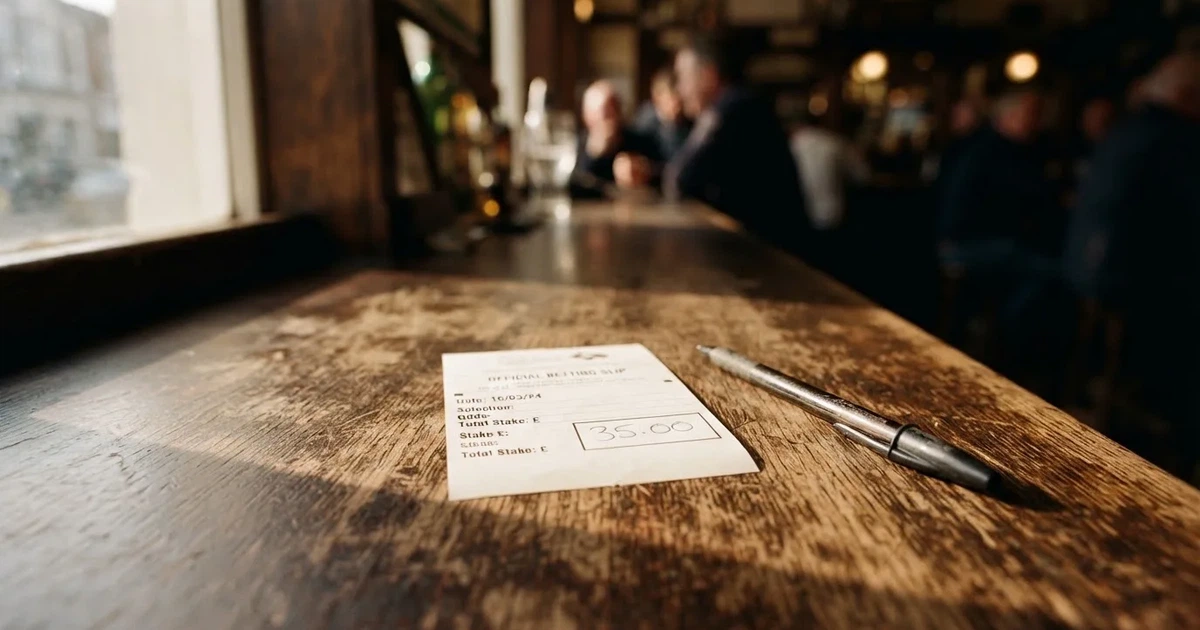
A betting exchange is a marketplace where customers back and lay outcomes against each other; the operator is not a party to the bet and earns revenue from commission rather than a built-in margin. That single difference is why an exchange price is usually better than a bookmaker’s price, and why every cost a punter pays on an exchange is different in kind from the one paid on a high-street bookie — there is no overround, only a commission charged on net winnings. The opposite side of that gain is the practical one: somebody has to be on the other side of every trade, liquidity is finite, and the rate the exchange publishes is the rate the punter actually pays for sitting at that table.
Live Betting and Cash Out on Betting Exchanges
Live betting is where an exchange and a traditional bookmaker diverge most sharply, because on an exchange the in-play price moves only when somebody backs or lays it. Momentum, suspensions and the volume at each price tick matter more than any promised “live feed” badge. Whichever side of the punt sits first decides what the next customer pays, and that is the practical edge live punters chase at the cash-out screen.

How live betting works on an exchange
A bookmaker in-play price is set by a trading team and refreshed as data arrives; an exchange price is set by the next customer willing to back or lay the outcome at that number. Liquidity — the depth of unmatched stake sitting either side of a price — is therefore the variable that decides whether a price exists at all. A market with one backer waiting to lay a horse at 4.0 is a market where the £5 lay at 3.95 sits unmatched, not a market where the punter got the better of an in-play move.
A cash-out offer, where one exists, quotes the live mid-price minus the exchange’s own commission charge plus a buffer the platform keeps. The offer is rarely the true mid, and on a thin market it is rarely the best price the punter could have obtained by leaving the bet settled. The honest framing is that cash out is an early-settlement contract between the customer and the platform, not a free option on the same bet.

The suspension pattern
Sports governing bodies pause betting at key moments — a goal, a wicket, a horse falling — to give traders a chance to reprice. On an exchange the suspension simply means no new trades match in that window, and the price that returns when trading resumes reflects whatever the market has decided, not what the operator decided. That is a useful discipline for the punter who tracks suspensions as a signal, and a quiet hazard for the punter who treats a suspension as a guaranteed pause.
In-play on the brands reviewed
Betfair Sportsbook covers in-play across the major sports with Bet Builder, free live streaming of UK and Irish horse racing and football inside the app, and a 90 Minute Payout market. Matchbook runs in-play alongside its exchange product, with Bet Builder, multiples and live streaming of horse racing and greyhounds on the app. Smarkets publishes a 2% standard commission on eligible exchange bets and has offered 0% commission for 60 days on a £10 first deposit. DAZN Bet provides Cash Out, Bet Builder, daily bet boosts and in-play betting on its sportsbook, with the explicit caveat that cash out availability is not guaranteed and bets stand if it is unavailable. Star Sports runs pre-event and in-play markets with Bet Boosts, Daily Specials, Weekend Enhanced Boosts and in-play betting on football, horse racing, golf and US sports.
The cost question lands here: a free live stream on an exchange that charges 2% commission on net winnings is a different value proposition from a free live stream on a bookmaker with a 6% overround built into every price. The stream itself carries no charge; the venue it sits in does.
Predictions, Trading and the Systems That Promise Edge
The betting exchange is the venue most often named in strategy literature because the lay side opens up trades that a traditional bookmaker cannot. A punter backing a horse at 10.0 and laying it later at 6.0 — a trade, in market language — is collecting the difference between the two prices minus commission. Trading is the right word for it, and it brings the same costs and the same risks as any other market the punter sits at.
Why the lay side changes the math
A back bet at decimal odds 2.0 on a £10 stake returns £20 gross and £10 net if it wins. The same stake laid at 2.0 — meaning a £10 liability if the selection wins — collects £10 if the selection loses. The liability is the most a person can lose in the worst case. That is the headline of “lay the favourite” systems that have circulated for years: the punter collects when the favourite does not win, which happens more often than the favourite winning. The catch is the same as any market discipline — favourite prices shorten the day they lose, so the trade that looked profitable in the morning can sit unmatched at lunchtime.
The systems that claim to win
Exchange betting system labels cluster around bankroll management (stake sizing), tipster follow-through and algorithmic price-tracking. None of them change the rate commission is charged at, and most of them quietly assume the same liquidity the punter has to find on a Wednesday in March when the only event is a South American reserve league. The honest framing is that a system is a routine of when to bet and at what price, and the cost of running it is the commission paid on every winning leg.
The override that keeps surfacing
Any system that promises an edge from a fixed bankroll idea — “lay the favourite, stake to win 5% of bank” — works on paper until the favourite loses five in a row, at which point the lay stake that the bank can afford shrinks to the unit size the system was designed to scale past. The override is not a flaw of the system in isolation; it is the cost of not having a reserve line for a sequence that the table did not produce in the back-test.
What commission does to a winning streak
A punter winning consistently pays commission on every settled win; a punter losing consistently pays nothing on the losing bets themselves, only on what survives in the account after a withdrawal. That asymmetry is the silent edge on the exchange for the kind of customer who does not withdraw, and the silent tax for the kind who locks in profit. Either way, the commission rate is the lever and the punter sits underneath it.
Bet Types, Odds and the 0% Commission Pitch
The exchange’s bet types follow the same vocabulary as a bookmaker — single, each-way, accumulator — and add the lay bet and the trade. The 0% commission offer is the most-marketed line in the segment, and the one where the headline price and the resulting cost diverge most.
The 0% commission window
Smarkets has offered 0% commission for 60 days from sign-up with a £10 first deposit. The promotion reaches the punter as a free trial; the rate that returns when the window closes is the published standard. The cost analysis is straightforward: 60 days covers the active customer who places one bet a week and ignores the proposition; the active customer who places one bet a day on Premier League fixtures burns through the 60-day saving in two weekends and is back on the standard rate with no free bet to show for it.
The same logic applies wherever a “zero commission” banner sits: it is a rate on net winnings, not a discount on every bet, and it rarely extends past the qualifying period. A punter who reads 0% and assumes the exchange is cheaper than every alternative for an unlimited time will over-rate the brand.
Limits, liquidity and the bets an exchange refuses
Betting exchanges generally limit odds to between 1.01 and 1000, and bet sizes are not restricted as long as opposing customers match the stake. The qualifiers are doing the work: a £5,000 lay at 8.0 on a Thursday evening League Two match has no liquidity, and the bet sits unmatched indefinitely. The price the punter sees on screen is not the price at which a bet of that size is achievable; it is the price at which somebody, somewhere in the queue, wants to trade.
Combination bets and what commission multiplies into
A combination bet — an accumulator — multiplies the odds of its legs into one price; the exchange treats it as one bet, and the commission charged on a winning combination is the standard rate on the single net winning amount. That is cheaper than a traditional bookmaker charging a margin on every leg individually, because the overround compounds across each selection in a same-game or multi-leg acca. The cost discipline is therefore the same as ever: the fewer the legs, the better the price, regardless of the venue.
Reading a price as a margin, in one sentence
Picking an illustrative two-way market priced at decimal odds 1.90 on each side, the payout share is 1 ÷ (1/1.90 + 1/1.90) = 0.95 — or 95% — and the bookmaker’s margin is the remaining 5% of every unit staked. On an exchange the headline margin disappears and the cost moves from the price into commission on net winnings, which is why the same match might be priced at 1.92 / 1.92 on an exchange that charges 2% on net wins; an exact outcome-by-outcome comparison has to put the rate and the commission on the same page for it to be a comparison.
The Ten Betting Exchange Sites Ranked on True Cost
The ranking below scores each reviewed brand on three variables: the published commission rate and the conditions attached to it, the liquidity profile the operator’s own marketing names, and the regulatory position the Gambling Commission register records for the licence holder. Where a brand is a betting intermediary on the public register, it sits in the exchange column; where it is a remote general betting standard licence that offers cash-out but no formal exchange, the read is “sportsbook with in-play”, and the entry explains that distinction. Ten sites, in the order this ranking places them; the order is not copied from any marketing list and is not a recommendation.
1. Betfair — the deepest pool and the cost that comes with it
Betfair holds Gambling Commission remote licence 039439-R-319330-013 (account 39439) for remote general betting standard (real events). The licensee, PPB Counterparty Services Limited, also operates Paddy Power; never treat the two brands as independent. The Sportsbook offers in-play betting, Bet Builder, free live streaming of UK and Irish horse racing and football inside the app, and a 90 Minute Payout market. Exchange rates and rules specific to Betfair are stated only by the operator itself; commission on the exchange side follows the platform’s published tier.
The cost read: Betfair is the deepest exchange pool in the UK for Premier League, Champions League, English and Irish horse racing and the major US sports, and that is why the bulk of UK exchange trading sits on it. The cost of that depth is the rate the commission sits at when the promotional window closes and the lay liquidity that disappears outside the peak fixtures. A punter who trades Premier League football at 3pm on a Saturday pays the rate; a punter who tries to lay League One on a Tuesday evening pays in unmatched bets and partially filled trades.
The verdict belongs to the trade: Betfair is the venue the liquidity tells a punter to use, and the commission is the price of that depth. For a punter whose book is mainstream, this is the place to be. For a punter whose book is small-market football at off-peak hours, it is a thin pool waiting to be filled.
2. Smarkets — published 2% rate and the 60-day window
Smarkets operates under Gambling Commission remote licence 039173-R-319366-011 (account 39173), category remote betting intermediary. The licence holder is Smarkets (Malta) Limited, and the platform has run since the late 2000s as a direct challenger to Betfair on commission rate rather than liquidity depth. The standard rate is 2% on eligible exchange bets.
The cost read: 2% on net winnings is the cleanest number in the segment, and the 60-day 0% window on a £10 first deposit makes the first two months a known-value period for a customer who places at least one eligible bet per week. The cost of that lower rate is liquidity: Smarkets covers the major sports, but on UK horse racing outside the televised meetings the available lay stake is a fraction of Betfair’s at the same price. The price improvement of 2% commission is wasted if the bet does not match in the size the punter wants to place.
The verdict is honest about what the savings buy: Smarkets rewards the punter whose focus is mainstream football, the major US sports and the televised racing, and a low-cost baseline beyond the 60-day window. A punter whose focus is smaller markets pays for the saving in unmatched stakes.
3. Matchbook — exchange plus sportsbook in one venue
Matchbook runs under Gambling Commission remote licence 039504-R-319407-024 (account 39504), categories remote general betting standard (real events) and remote betting intermediary. The licence holder is Triplebet Limited. The app offers Bet Builder, multiples, in-play betting and live streaming of horse racing and greyhounds.
The cost read: Matchbook publishes a commission rate that sits below the segment average, and the dual licence — exchange plus sportsbook — gives a punter who wants both under one account a way to avoid running two wallets. The cost of the dual licence is that the sportsbook product is the secondary venue on a platform built around the exchange; the Bet Builder and multiples are useful, but the depth of pre-match markets is not what a sportsbook-only brand the size of the high-street names offers.
The verdict belongs to the customer wanting a single venue: Matchbook suits the punter who wants the exchange experience and an in-play sportsbook without juggling two operators. The exchange side is the headline; the sportsbook is the convenience.
4. Kalooki Sportsbook — the company-record numbers on the licence page
Kalooki Sportsbook is licensed by the Gambling Commission under remote licence 057730-R-333396-005 (account 57730) for remote general betting standard (real events). Its licensee, Kalooki Sports Book Ltd (company number 12938274), is a GAMSTOP member.
The cost read: Kalooki is a sportsbook, not a betting exchange; it does not operate a back-lay market and earns its margin through the standard overround rather than commission. The licence record is the clearest identifier on the segment: company number on Companies House, Gambling Commission account on the public register, GAMSTOP membership stated on the homepage. A punter comparing venues on regulatory cleanliness finds the names on one page. The cost of choosing a smaller sportsbook over a major brand is the depth of pre-match markets and the in-play trading volume; it is real, and it is the trade the punter accepts in exchange for the platform’s terms being short and visible.
The verdict is honest about the trade: Kalooki suits the punter who values a clean regulatory position and accepts a thinner market offering in return. It is a sportsbook the way an exchange customer reads a sportsbook — by what’s in the programme, not by what the marketing says is there.
5. BetTom — the matched welcome package across sport and slots
BetTom, with Bet Tom Limited as licensee, holds Gambling Commission remote licence 064959-R-339314-003 (account 64959) for remote general betting standard (real events). The sports welcome offer is 50% back as a free bet of up to £50, with a matching 50% back up to £50 as free slot funds for casino play.
The cost read: the headline is a “matched” pair of bonuses across two products, but the headline and the cost are different things under the Gambling Commission’s promotional rules. From 19 January 2026, wagering requirements on bonuses are capped at 10x and mixed-product promotions are banned — an offer that requires gambling on two or more product types, such as betting and casino, cannot run. BetTom as an offer described in the App Store listing reads as paired across products; the current rule set does not allow that pairing to ship as written, and a punter who reads the offer description should expect the operator’s own terms page, not the listing, to carry the correct structure. The free bet’s stake is usually not paid back with a win, so the headline “up to £50” never represents £50 in cash value at any price; the realised value is the free-bet amount multiplied by (odds − 1) divided by odds, scaled by the market’s payout share.
The verdict belongs to the price: BetTom is a sportsbook priced on the standard overround; the welcome offer is a promotional layer the regulation has tightened. A punter evaluating BetTom is reading the sportsbook margin and the licence record, not the offer headline.
6. DAZN Bet — cash out with a caveat
DAZN Bet’s remote licence 048756-R-327274-019 (account 48756) for remote general betting standard (real events) is held by DZBT Limited. The platform offers Cash Out, Bet Builder, daily bet boosts and in-play betting; its cash-out terms specify that availability is not guaranteed and bets stand if it is unavailable.
The cost read: every sportsbook’s cash-out is a venue for early settlement, not a free option on the same bet, and DAZN Bet publishes the rule that makes that explicit. A punter whose strategy depends on cash out will read that line as an operational note, not a marketing disclaimer. The cost of the cash-out offer on a thin in-play market is the gap between the offered price and the true mid, plus the platform’s buffer; on a deep market it is a tighter gap, on a thin market it is a wider one.
The verdict belongs to the cash-out rule: DAZN Bet suits the punter who treats cash out as a backup and not a strategy. A punter whose plan depends on closing positions early in play should know the offer is conditional.
7. Midnite — minimum stake and minimum price set high
Midnite Limited holds Gambling Commission remote licence 101839-R-342850-001 (account 101839) for remote general betting standard (real events). The site provides in-play events, an acca builder, popular accas and price boosts with maximum-stake limits. New customers who bet £5 or more on pre-match odds of EVS (2.0) or greater within 14 days of sign-up receive £25 in free bets and 50 free spins, valid for 7 days.
The cost read: the minimum qualifying price is 2.0 — EVS or greater — which excludes odds-on markets and lays at the long end of the price scale. The qualifying window is 14 days, and the free bets expire 7 days after issue. A punter whose betting pattern is short-priced lays or short-priced fancies does not convert this offer at all. The bonus arrives as free bets, whose stake is usually not paid back with a win; £25 in free bets at an even-money selection pays £25 in cash if it wins, £0 if it loses. The expected value of the offer is the free-bet amount multiplied by (odds − 1) divided by odds, weighted by the market’s payout share — the headline of “£25 free bets and 50 free spins” describes the structure, not the cash.
The verdict belongs to the qualifying terms: Midnite is a sportsbook, not an exchange, and the welcome offer is a price-boost plus a free-bet layer over the standard margin. A punter who qualifies on the price band finds the offer worth taking; a punter who doesn’t doesn’t.
8. Star Sports — boosts and specials on a sportsbook licence
Star Sports, licensed by the Gambling Commission under remote licence 009177-R-104555-019 (account 9177) for remote general betting standard (real events), is held by Star Racing Limited. The platform offers pre-event and in-play markets with Bet Boosts, Daily Specials and Weekend Enhanced Boosts, plus in-play betting on football, horse racing, golf and US sports.
The cost read: Star Sports is a sportsbook, and its competitive advantage is the enhancement it layers over standard odds: boosted prices and specials on the headline fixtures. Each boost is a price the operator has chosen to pay above the published line; the cost is paid in lower margins on the boosted event and in standard margins everywhere else. A punter whose betting pattern is boosted-leg accas will over-attribute the value to the platform; the right reading is that the boost moves a single leg relative to the broader market, not a structural change in the platform’s terms.
The verdict belongs to the boost catalogue: Star Sports suits a punter who hunts the weekly specials and reads them against the closest rival line. It does not suit a punter looking for an exchange product or a low-margin baseline book.
9. Fafabet — Best Odds Guaranteed on UK and Irish racing
Fafabet holds Gambling Commission remote licence 057385-R-333191-006 (account 57385) for remote general betting standard (real events), held by Taichi Tech Limited. It pays Best Odds Guaranteed on UK and Irish horse racing win and each-way bets from 9am on race days: if the starting price is bigger than the original price, the bigger odds are paid.
The cost read: BOG is the relevant cost saving on a racing-focused book, because the longer starting price over the early price is the headline gain on the bet. The cost is the standard overround on the early price the platform publishes, which sits inside the day’s competitive range. A punter who takes the early price on every race and lets the SP settle whether the book pays more is the punter BOG rewards; a punter who waits until the off for the SP alone has given up the early-price margin on whatever selection wins on the early price.
The verdict belongs to the racing programme: Fafabet suits a punter whose betting pattern is UK and Irish racing and who wants the BOG rule stated plainly. It does not suit a punter looking for an exchange experience.
10. Bet600 — Best Odds Guaranteed on horse racing
Bet600 is licensed by the Gambling Commission under remote licence 044731-R-323941-016 (account 44731) for remote general betting standard (real events), held by Tyche Tech Limited. It pays Best Odds Guaranteed on horse racing: if the starting price is bigger than the early or show price taken, the bet is paid at the SP.
The cost read: the BOG rule is the headline benefit; the cost is the overround on prices the platform publishes before the off. A punter who reads BOG as a structural advantage without checking the starting line’s daily price will over-rate the offer. The honest reading is that BOG is a safety net on selections the market moves against, paid out of the operator’s book rather than the punter’s stake.
The verdict belongs to the racing programme: Bet600 suits a punter focused on UK horse racing who wants the SP fallback rather than a deeply layered market. The market depth is the cost.
The Betting Exchange Landscape in Great Britain
The segment runs on two licence categories on the Gambling Commission register: remote betting intermediary (the licence for back-lay markets) and remote general betting standard (the licence for fixed-odds bookmaking). Betfair, Smarkets and Matchbook hold the intermediary category; the rest of the reviewed set hold the standard bookmaker licence and earn margin through the overround rather than commission on winnings. A punter choosing between a betting exchange and a sportsbook is choosing between two revenue models — and the cost difference is the headline price of the bet minus the commission the exchange keeps of any net win.
The historical context
Flutter and Betfair merged in 2001, with Betfair chosen as the primary exchange; the original platform ceased operations in January 2002. The choice of Betfair as the surviving venue is the structural reason the brand carries the deepest UK pool today. The history is also why Betfair and Paddy Power are run under a single parent on the Commission’s public register; treating them as separate operators in a ranking inflates the count.
The licence test in plain language
A bookmaker or exchange whose remote facilities are used in Great Britain needs a Gambling Commission licence wherever the operator is based. A Curaçao, Maltese or Gibraltar licence is not a substitute. The Commission’s public register is the whole test of who holds a licence and can be searched by business name, trading name, domain or account number. Licensed operators use .com as well as .co.uk, so the domain alone proves nothing. The register’s data is the only place a licence is recorded and the only place it should be checked.
What that means for the ten reviewed brands
Every brand in this ranking holds a Gambling Commission remote licence for Great Britain, on the categories above, under the licence holders named on the register. The exchange bracket (Betfair, Smarkets, Matchbook) earns commission on net winnings; the sportsbook bracket (the other seven) earns the overround inside every price. The two brackets are not the same business, and a punter who treats them as substitutes is reading a headline without the cost.
Legality and Regulation for Betting Exchanges in Great Britain
The Gambling Commission licenses the whole commercial market under the Gambling Act 2005, which covers Great Britain (England, Scotland and Wales); Northern Ireland is outside the Act and has its own older law. A GB-licensed operator is licensed for Great Britain, not the whole United Kingdom, and the language in any terms page should not be read as broader than that. Since the Gambling (Licensing and Advertising) Act 2014, an operator whose remote facilities are used in Great Britain needs a Commission licence wherever it is based.
The licence categories that matter
Remote general betting standard (real events), remote general betting standard (virtual events), remote general betting limited, remote pool betting and remote betting intermediary are the categories under which sports betting and exchange products run. The intermediary licence is the one the segment names as the “exchange” licence; the others are bookmaker licences. Financial spread betting is regulated by the Financial Conduct Authority, not the Gambling Commission. The minimum age is 18; name, address and date of birth are verified before a customer can deposit or gamble, including with a free bet or bonus.
In-play, esports and the markets a customer can bet on
There is no statutory list of permitted bets or markets. An operator holds a licence for a category and offers markets under its own rules and the Licence Conditions and Codes of Practice (LCCP). GB bookmakers offer in-play betting and the controls are the operator’s licence conditions and customer-protection duties; no statutory text describes in-play as “unrestricted”. Esports are treated like any other event; virtual events are a separate licence category; bets on politics, TV shows and novelty markets are offered by GB bookmakers and no statutory prohibition was found. Betting exchanges run under a betting intermediary licence; rates and rules specific to exchanges are stated only by each operator’s own terms.
Credit cards, identity and the cost of being licensed
Credit cards are banned for gambling in Great Britain, including credit-card-funded payments through an e-wallet; debit cards and bank-based payments are not covered by that ban. Identity verification before the first deposit means no anonymous play at a licensed site, and source-of-funds questions at higher spend are normal under the money-laundering rules. The practical cost: a punter who wants the protections pays in time spent uploading documents, and a punter who wants the absence of checks pays in the protections themselves.
Tax on winnings
The player pays no tax on betting winnings in Great Britain (general information, not tax advice; a professional gambler should ask HMRC or an adviser). General Betting Duty is the operator’s tax on gross profits, currently 15%; from 1 April 2027 a new remote betting rate of 25% applies within it, while remote bets on UK horse racing, bets on self-service betting terminals in licensed premises, pool betting and in-person betting stay at 15%. Until 1 April 2027 the remote rate stays at 15%; whether operators pass duty on through odds is not established, and a punter reading odds on screen should not assume a duty charge is hidden there. The Commission’s statutory levy is a separate charge, not a tax.
The offshore cost a punter pays by using an unlicensed site
Providing gambling facilities in Great Britain without the licence the Act requires is an offence under section 33 of the Gambling Act 2005, aimed at the operator. There is no offence aimed at a customer who merely bets on an unlicensed site. The loss of protection is the headline: no GAMSTOP coverage, no Commission complaints route, no approved dispute-resolution body, no British consumer redress if funds are withheld, not bound by the 10x bonus cap or the £150 vulnerability check. Enforcement is disruption, not blocking — cease-and-desist notices, search-engine referrals, work with registrars, hosts and payment providers. The Commission has been given, or is about to receive, court-order DNS blocking powers, and the register data is the only place an unlicensed brand is identifiable as such. The framing is honest: licensed means checks, limits, GAMSTOP and a bonus cap, with verification required before the first bet; unlicensed means none of those protections and the possibility of lost funds.
Responsible Gambling Tools Available on Betting Exchanges
GAMSTOP is the national multi-operator online self-exclusion scheme and a mandatory licence condition for online operators since 31 March 2020; periods are six months, one year, five years, or five years with auto-renewal, and after the minimum period the exclusion stays in place for a further seven years unless the customer asks GAMSTOP to remove it. It covers online sites and apps; betting shops use a separate service.
The financial vulnerability check
A financial vulnerability check (LCCP condition 3.4.4, in force since 30 August 2024) applies to licensed remote betting when a customer’s deposits minus withdrawals exceed £150 in a rolling 30 days (since 28 February 2025). It is a public-record check (for example bankruptcy or county court judgments), not an income check and not a credit reference check. The check is a public-record flag that affects whether the operator continues a customer’s depositing pattern, not a question the punter answers on a form.
Affordability checks in the staged plan
Financial risk assessments — the “affordability checks” of the press — are announced in a staged plan (Commission article of 7 July 2026), with no start date. The right framing for the punter is that they are “announced, staged, no start date”, not “in force”. A punter whose book is steady will see no change yet; a punter whose deposits cross the £150 net-in-30-days threshold will already be passing through the public-record check.
Deposit limits under RTS 12
Operators must offer a gross deposit limit on a fixed time frame; the first changes have applied since 31 October 2025, a second phase was postponed to 30 September 2026, and whether it is live is not established. There is no state-set deposit or loss ceiling for betting: limits are the customer’s choice. The cost of a self-set deposit limit is paid in the bets a punter cannot place; the cost of choosing none is paid in the absence of a ceiling.
Help services
GamCare runs the National Gambling Helpline. GambleAware funds treatment and education. The NHS operates gambling clinics for problem gambling in England. Gamblers Anonymous runs peer-support meetings across the UK. None of these is a licensed operator; all of them are reachable without an account.
Crypto and Anonymity on a UK Betting Exchange
Identity verification before the first deposit means no anonymous play at a licensed site, and source-of-funds questions at higher spend are normal under the money-laundering rules. A British named-account rule, a state list of permitted payment methods and any rule for or against cryptocurrency deposits at licensed operators are not established. The cost question lands on the verification stage: a punter who wants a deposit in crypto on a UK-licensed site pays in the verification that the licence mandates, and an unlicensed site that accepts crypto does not provide the British dispute route that the licence also mandates.
What that means in practice
A punter who reads “crypto accepted” on an exchange marketing page and assumes the platform is GB-licensed is reading one line of the licence. The Commission’s public register is the test of whether the brand holds a licence, and a brand that advertises crypto deposits is not thereby licensed. The register search either confirms a record or shows none; the punter’s first move is the search, not the deposit.
Bonuses and Free Bets on UK Betting Exchanges
The exchange’s headline customer acquisition is a 0% commission window, not a free bet, because the exchange’s revenue model does not lend itself to the bookmaker’s sign-up bonus. Where a free bet or bonus does appear on the licensed segment, it sits on the sportsbook side, not the intermediary side.
The promotional rules in force
From 19 January 2026, wagering requirements on bonuses are capped at 10x (a £10 bonus at 50x needs £500 of bets; under the cap no more than £100), and mixed-product promotions — an offer that requires gambling on two or more product types such as betting, casino, bingo and lottery, for example “bet on football to get free spins” — are banned. Whether the cap applies to free bets with no wagering condition, and any cap on the money value of a bonus, are not established; a punter reading the offer should read the operator’s own terms page on turnover rather than the headline.
What a free bet is worth, and what its headline says
For a free bet whose stake is not paid back with a win, the value is the free-bet amount multiplied by (odds − 1) divided by odds, scaled by the market’s payout share — the price the punter paid to take the offer. A £25 free bet at odds of 3.0 on a market with a 95% payout share clears £25 × 2/3 × 0.95 = about £15.83 of expected return across the bets the punter chooses to place it on. The “£25” in the headline is the entry ticket, not the expected return, and the realised value is what the headline quietly discounts.
Reading a bonus in three lines
The headline states the entry ticket. The terms state the qualifying market, the qualifying price band, the qualifying window, the maximum winning payout and the rollover (where one applies). The full terms state the rest — what counts as qualifying, what doesn’t, and what happens if the offer is combined with another in a way the rules forbid. The punter’s cost sits in the gap between the three.
Mobile Apps and the On-the-Go Punter
The exchange segment’s app stack clusters around three roles: the trading-floor experience for in-play and lay-side action on the major brands, the same-screen sportsbook-plus-wallet experience for dual-licence operators, and the casino-sportsbook plus scratchcard plus lottery experience for app brands that bundle multiple products. Whatever the shape, the cost the punter pays is on the bet, not on the app, and the platform terms read the same on handset as on desktop.
What the App Store age rating does and does not say
Kwiff’s app carries a 17+ App Store age rating; the platform is licensed by the UK Gambling Commission and described as a trademark operated by Spryme Ltd. The age rating is set by the platform’s metadata on the store, not by the regulator, and it sits alongside the licence citation in the App Store listing rather than in the regulator’s register. A punter reading the rating for any other conclusion is reading the wrong field.
What the apps of the brands reviewed offer
Betfair and Smarkets publish dedicated exchange apps; Matchbook runs an exchange-plus-sportsbook app. DAZN Bet, Midnite, Star Sports, Fafabet, Bet600 and BetTom publish sportsbook apps. Lottoland UK’s app combines casino, lottery betting, sports betting and scratchcards, and it states it is licensed by the Gambling Commission for customers in Great Britain — a separate brand from the rest of the segment. The BetMGM UK app is published by LeoVegas Gaming p.l.c. and lists Gambling Commission account number 39198. The 10bet app is published by 10bet Limited and states that the UK site is licensed by the Great Britain Gambling Commission under licence 43173. Copybet UK Limited states it is licensed and regulated in Great Britain by the Gambling Commission under account number 53774. Spreadex is regulated by the FCA for spread betting and by the Gambling Commission for fixed-odds betting, and states that spread betting losses can exceed the deposit — a different proposition from the rest of the segment, with FCA oversight that none of the others carry.
The on-the-go cost
An app is not a different product from the same operator’s website; the licence, the commission rate, the margin and the terms travel with the operator, not the device. The cost the punter pays on a £10 bet at decimal odds 2.0 is the same: a return of £20 gross and £10 net if it wins, the spread between the prices on the two sides if it loses, and the commission the venue charges on net winnings. The handset does not change the math.
The Comparison Table — Licence and Terms, Side by Side
The table below puts the reviewed brands on the fields that define the cost of using them: the Gambling Commission remote licence number that confirms the licence, the operator the Commission’s register records as the licence holder, and what the operator’s own terms say on the page’s central subject — what an exchange-style back and lay market costs the punter using it.
| Brand | Gambling Commission remote licence and licence holder | What the operator’s own terms state on the key subject |
|---|---|---|
| Betfair | 039439-R-319330-013 (account 39439); PPB Counterparty Services Limited | Exchange commission and any promotional rate per the platform’s published tier; sportsbook offers in-play, Bet Builder, free live streaming of UK and Irish racing and football in-app, and a 90 Minute Payout market |
| Smarkets | 039173-R-319366-011 (account 39173); Smarkets (Malta) Limited | 2% standard commission on eligible exchange bets; 0% commission for 60 days with a £10 first deposit |
| Matchbook | 039504-R-319407-024 (account 39504); Triplebet Limited | Exchange-plus-sportsbook; Bet Builder, multiples, in-play and live streaming of horse racing and greyhounds |
| Kalooki Sportsbook | 057730-R-333396-005 (account 57730); Kalooki Sports Book Ltd | Sportsbook licence; company number 12938274 on the licence page; GAMSTOP member |
| BetTom | 064959-R-339314-003 (account 64959); Bet Tom Limited | Sportsbook licence; welcome offer 50% back as a free bet up to £50 with matching 50% back up to £50 as free slot funds, subject to the operator’s terms |
| DAZN Bet | 048756-R-327274-019 (account 48756); DZBT Limited | Cash Out, Bet Builder, daily bet boosts and in-play; cash out availability not guaranteed and bets stand if it is unavailable |
| Midnite | 101839-R-342850-001 (account 101839); Midnite Limited | Sportsbook licence; welcome offer of £25 in free bets and 50 free spins on a £5+ qualifying bet at EVS (2.0) or greater within 14 days, valid 7 days |
| Star Sports | 009177-R-104555-019 (account 9177); Star Racing Limited | Sportsbook licence; pre-event and in-play markets with Bet Boosts, Daily Specials and Weekend Enhanced Boosts on football, horse racing, golf and US sports |
| Fafabet | 057385-R-333191-006 (account 57385); Taichi Tech Limited | Sportsbook licence; Best Odds Guaranteed on UK and Irish horse racing win and each-way bets from 9am on race days |
| Bet600 | 044731-R-323941-016 (account 44731); Tyche Tech Limited | Sportsbook licence; Best Odds Guaranteed on horse racing if the starting price is bigger than the early or show price taken, paid at the SP |
The table’s structure is the cost the punter pays: a column of licence numbers where the Commission’s register is the verification, and a column of operator terms where each platform’s own terms are the verification. The exchange bracket sits on the left of that split and the sportsbook bracket on the right; the column the punter reads first decides which side of that split they are sitting on.
Frequently Asked Questions
How does a betting exchange actually work?
A betting exchange is a marketplace where customers back and lay outcomes against each other on the same event; the operator is not a party to any bet and earns revenue by charging commission on net winnings per market, with losing bets generally incurring no commission. The platform simply matches customer against customer, which is why the typical price is closer to the true probability than a bookmaker’s, and why somebody has to be willing to sit on the other side before any trade matches.
What is the difference between a back bet and a lay bet?
A back bet wagers that an outcome will occur and a lay bet wagers that it will not. A lay bet puts the punter in the role a bookmaker normally plays — taking the stake on the side that wants the outcome to happen — and the most a layer can lose is the liability (the stake if the outcome they are laying against does happen), while the most they can win is the backer’s stake. The trade is what a punter does when they have backed one price and laid the same selection at a shorter one, collecting the difference minus commission.
How can a customer check that a bookmaker holds a Gambling Commission licence?
The Commission’s public register is the only test. It can be searched by business name, trading name, domain or account number, and it shows the licence number, the licence categories a brand holds and the licence holder behind it. A Curaçao, Maltese or Gibraltar licence is not a substitute for a GB licence, a .com domain is not a licence, and the absence of a record on the register is the cleanest sign a brand is unlicensed for Great Britain.
How is the return on a bet worked out from the stake and the odds?
The formula is return = stake × odds, with net profit = stake × (odds − 1). A £10 back bet at decimal odds 2.0 returns £20 if it wins (£10 net), and a £10 liability laid at 2.0 returns £10 if it loses (with £20 payable to the backer if it wins — the punter’s liability in the worst case). For a combination bet the odds of the legs multiply into one price, and the resulting price is the basis for the commission the exchange charges on any net win.
What is the bookmaker’s margin and how is it visible in the odds?
The margin is what the bookmaker keeps of every unit bet on a market, calculated as 1 minus the payout share of all outcomes added together. For an illustrative two-way market priced at decimal odds 1.90 / 1.90, the payout share is 1 ÷ (1/1.90 + 1/1.90) = 0.95, and the margin is the remaining 5% of every unit staked. The narrower the overround across outcomes, the closer the price sits to a fair reflection of probability, and the lower the margin is what the punter pays to take the bet; an exchange that publishes 1.92 / 1.92 is publishing the equivalent of a 4% margin before commission is taken from any net win.
Betting sites & exchanges – Racingtipshub.com
Content created by the «Racingtipshub.com» team
